
How to Change Locks on a New House in Denver: Rekey or Replace

Replacing every lock may not be necessary. If the existing hardware is in good condition and works smoothly, rekeying can make old keys stop working without replacing the locks. Replace damaged or unreliable hardware, or choose replacement if you want a different lock. If you’re planning to change locks on a new house in Denver, start by assessing the condition of each lock.
It’s reasonable to want control over who can enter your new home, especially when you don’t know who may still have a copy of an old key. Rekeying and replacing locks can both help, but they solve the problem in different ways.
This guide explains how to choose between the two, what to inspect on every exterior door, and how to think about replacement locks and tools. You’ll also learn how to test the locks after the work, so you can feel more confident about your home’s entry points.
Table of Contents
Checking every exterior door
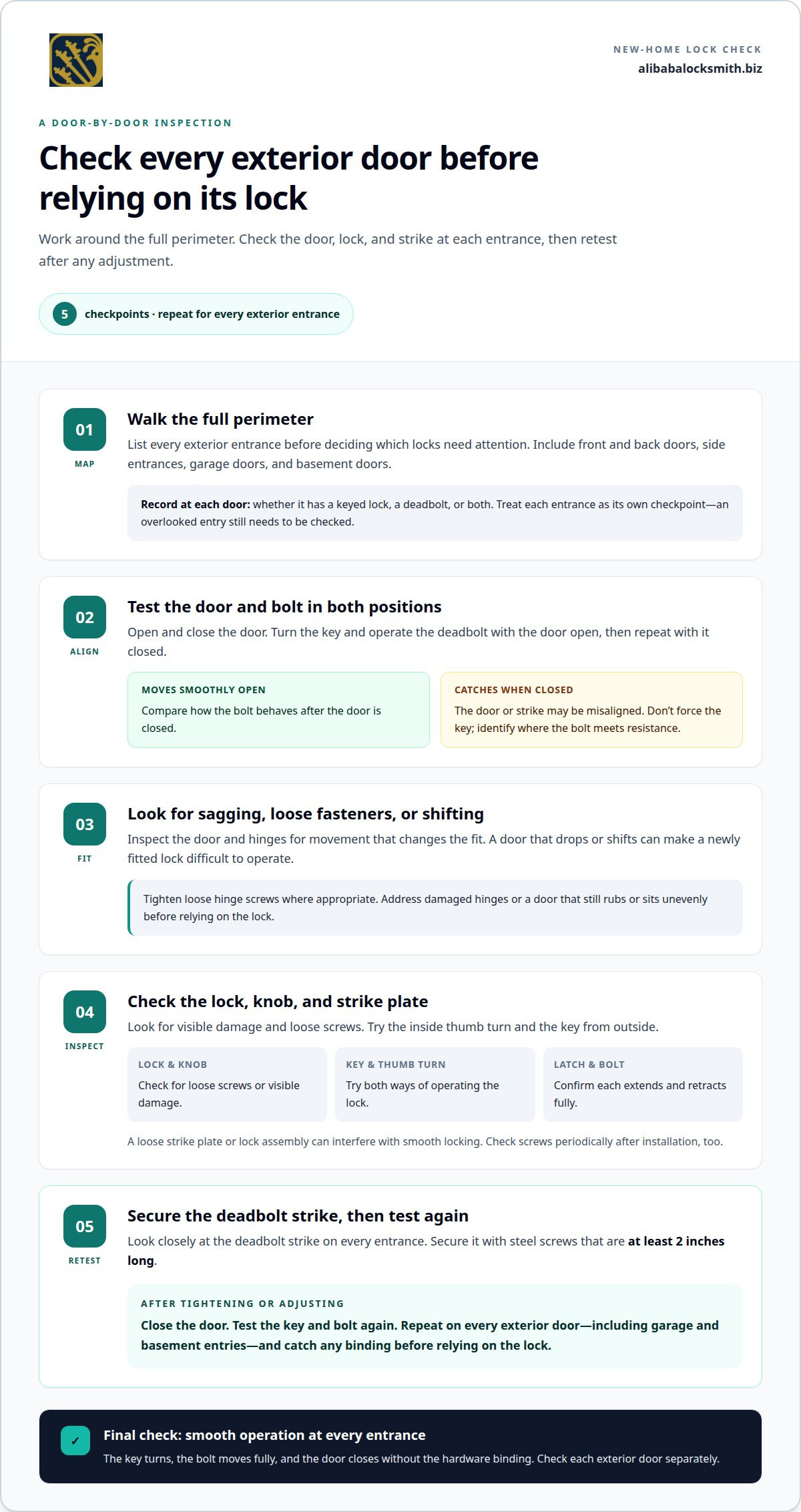
Walk the full perimeter and list every exterior entrance before deciding which locks need attention. Include the front and back doors, side entrances, garage doors, and basement doors. Treat each entry as a separate checkpoint: a new lock on the front door won’t secure an overlooked basement entrance. Note which doors have keyed locks, deadbolts, or both.
Check alignment at each door before testing its locking hardware. Open and close the door, then turn the key and operate the deadbolt with the door both open and closed. If the bolt moves smoothly while the door is open but catches when it’s closed, the door or strike may be misaligned. Don’t force the key; identify where the bolt meets resistance.
Inspect the door and hinges for sagging, loose fasteners, or movement that changes the fit. A door that drops or shifts can make a newly fitted lock difficult to operate. Tighten loose hinge screws where appropriate, and address damaged hinges or a door that still rubs or sits unevenly before relying on the lock.
Examine each lock, knob, and strike plate for loose screws or visible damage. Try the inside thumb turn and the key from outside, then confirm the latch and deadbolt extend and retract fully. Check the screws periodically after installation, too. A loose strike plate or lock assembly can interfere with smooth locking.
Look closely at the deadbolt strike on every entrance. Secure it with steel screws that are at least two inches long. After tightening or adjusting hardware, close the door and test the key and bolt again. Repeat the test on each exterior door, including garage and basement entries, so you catch binding before relying on the lock.
Choosing replacement locks and tools
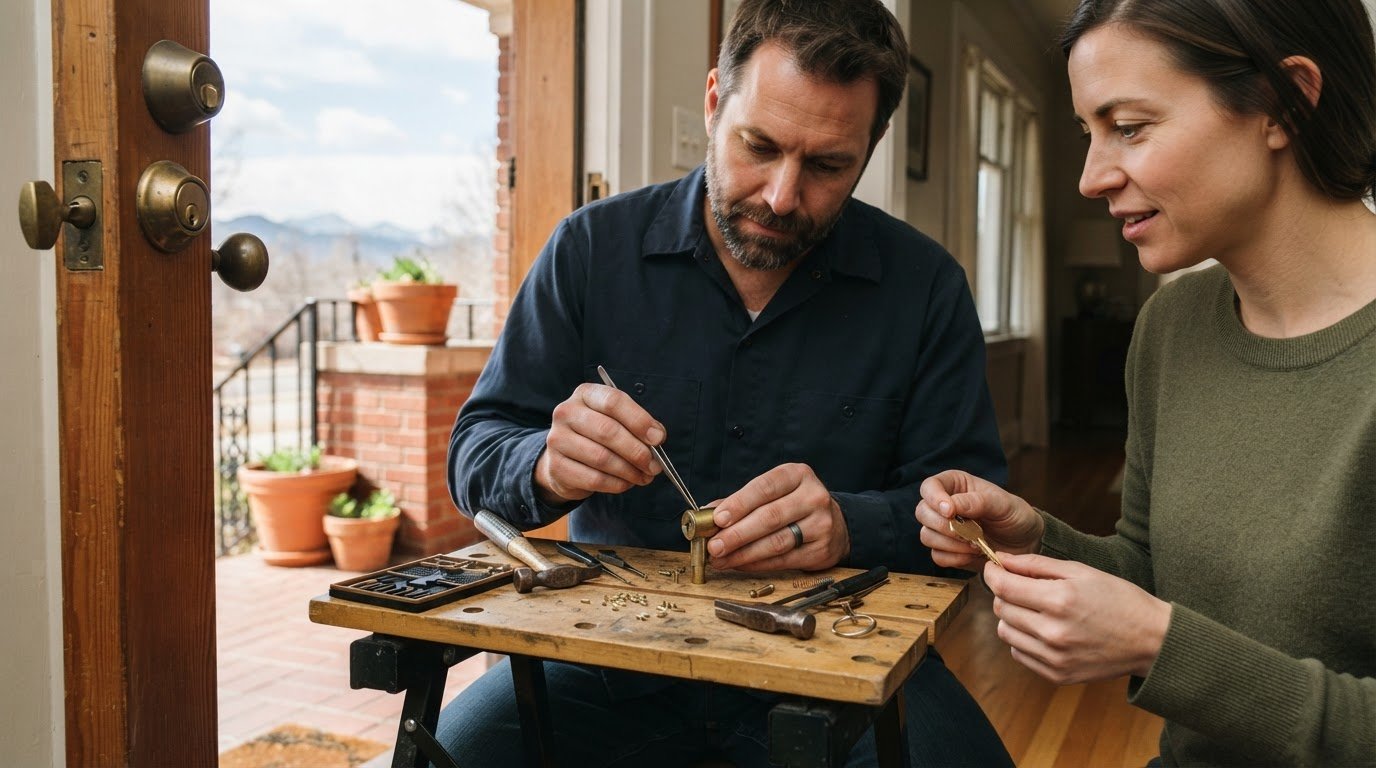
Start by choosing between rekeying and replacement. If existing hardware is in good condition, rekeying changes its internal pins and springs so it works with a new key. Some lock brands let homeowners rekey locks themselves. Replace damaged or unreliable hardware instead. Colorado does not require locksmiths to hold a statewide license or registration.
Choose a lock for each exterior door you decide to change. Match the new hardware to the door’s existing openings and the type of lock you need, such as a knob lock paired with a deadbolt. Before removing anything, compare the new lock’s components with the existing setup. That helps prevent mismatches during installation.
Gather the tools for the job before taking apart a lock. A screwdriver suited to the fasteners helps remove and secure the hardware. Keep the lock’s installation instructions nearby, since component order and fitting details vary by model. For a heavy-duty strike plate, use three-inch screws anchored into the wall stud.
Plan the key arrangement before buying multiple locks. You can have several new locks keyed to work with one key, which can simplify access across exterior doors. Two lock sets with the same code number use the same key. Check the packaging and keying information to make sure the sets match your plan.
Replace short screws holding a knob-lock assembly with two-inch steel screws. After fitting each lock, operate it with the door open, then closed. Confirm the key turns, the bolt extends fully, and the door latches without forcing the hardware. Smart locks can involve more complex installation, so professional help may be appropriate.
If you’d rather have the lock work handled for you, residential lock installation can help address replacement hardware and fitting.
First confirm that your lock’s brand allows homeowners to rekey it, then follow the lock’s instructions, since component order and fitting details vary by model. Rekeying changes the internal pins and springs so the lock works with a new key.
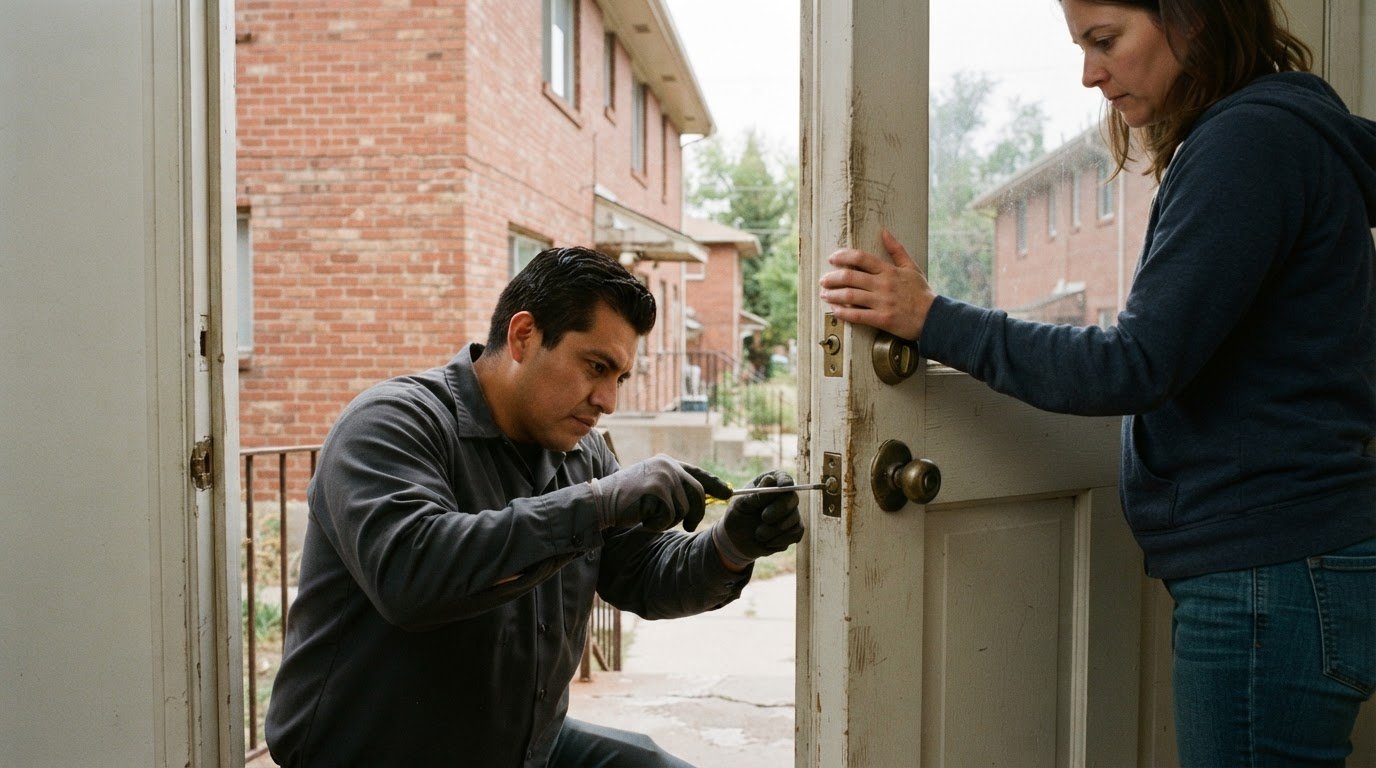
Included keys and labor warranty
Before approving a lock change, identify how many keys your household needs. Include regular occupants and a trusted person who needs authorized access. A front-door key may also operate other locks if they’re keyed alike, so clarify which doors each key will open. This prevents confusion during handover.
At completion, count the keys provided for each lock and record the count beside the door name, such as “back entry.” Keep one labeled key set in a secure place and distribute the others only to people who need access. Don’t label keys with your address, which could connect a lost key to your home.
Test every handed-over key in its assigned lock before the installer leaves. Turn each key from both sides where applicable, then check that the latch or deadbolt operates smoothly. If a key sticks or fails to turn, identify the specific door and key immediately. A written, door-by-door record makes the issue clear.
Read the written terms of any labor warranty rather than assuming what “warranty” covers. Separate workmanship coverage from the lock manufacturer’s product coverage. Note the coverage period, covered installation problems, exclusions, and how to report an issue. For example, a warranty may treat faulty installation differently from damage caused later.
Save the work order, warranty details, and key inventory together. Include the service date, the doors addressed, lock descriptions, and any follow-up instructions. If a lock later becomes difficult to operate, these records can help distinguish an installation concern from a changed door or damaged hardware. Keep documents private and store spare keys securely.
New homeowners should consider rekeying or changing locks if they’re unsure who has copies of the keys. Address every entrance, including back, garage, and basement doors. Store old locks and keys in a labeled bag for reinstallation.
How to choose a licensed and insured locksmith in Denver
Separate legal licensing from professional screening. Colorado does not require locksmiths to hold a statewide license or registration, so a “licensed” label alone doesn’t establish how a locksmith handles a residential lock change. Focus on clear service details, insurance documentation, and a written description of the work.
Ask for proof of insurance before work begins, and read what the document covers. Confirm that the policy is current and applies to the work being performed at your home. Replacing a deadbolt and rekeying existing hardware are different tasks, so make sure the planned service matches the description you receive.
Describe the job precisely: which exterior doors need attention, whether you want rekeying or replacement, and whether the locks should share one key. A clear scope helps prevent misunderstandings about the front entrance, side door, or garage entry. Request the planned work in writing, including any hardware changes.
Before agreeing to the work, ask for an itemized written estimate and an explanation of the charges. The amount depends on factors such as the number of locks, the method chosen, and the hardware required. Compare the estimate with the stated scope. Don’t rely on a verbal total that leaves out parts or labor.
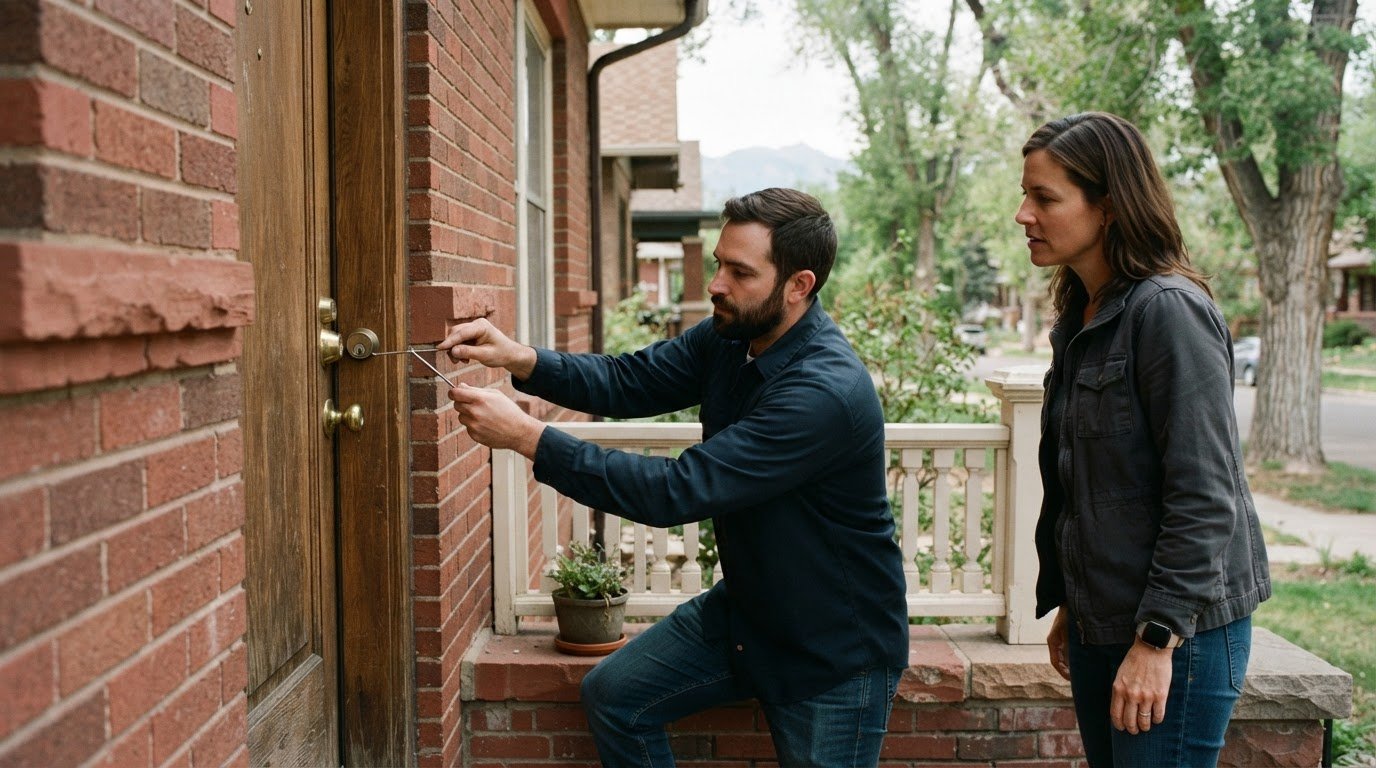
At the end of the visit, review the completed work and test each affected lock. Confirm that keys operate smoothly and that each door closes and locks properly. Keep the work order and any written warranty terms with your home records. If a problem appears later, those details identify the door and work involved.
For help planning a residential lock change, get help with your lock-change needs.
Ali Baba Locksmith
Ali Baba Locksmith helps Denver-area homeowners assess residential lock concerns, including whether rekeying or replacement suits their new home. If hardware is worn, a door’s lock is difficult to operate, or you want a clear plan for your exterior entries, our residential locksmith service can help. Tell us which doors need attention and what you’ve noticed, such as a deadbolt that catches or uncertainty about old keys. Those details help us identify the next step. Ali Baba Locksmith also provides commercial, automotive, and emergency locksmith services.
For help deciding how to secure your new home, contact Ali Baba Locksmith.
Set a clear plan for home access
A new home is also a chance to decide how access should work for everyone who lives there. Think about who needs a key, how you’ll manage spare keys, and what should happen when household access changes. A simple, consistent plan can make day-to-day entry easier and help you stay in control over time.
If you’re preparing to change locks on a new house in Denver, consider what matters most before arranging the work. You might want one key for several doors, replacement hardware on a particular entrance, or help deciding which approach fits your situation. Sharing those priorities gives the conversation a useful starting point.
Ali Baba Locksmith can help you take the next step with residential locksmith support. Contact Ali Baba Locksmith to discuss your home’s lock needs and move forward with greater confidence.
Frequently Asked Questions
Should I rekey locks instead of replacing them?
Rekey if the lock is dependable and you mainly need previous keys to stop working. Replacement is the better fit if a lock is damaged or unreliable, or if you want different hardware. For example, if the key turns inconsistently even after the door closes properly, replacing the lock may address a hardware problem that rekeying won’t solve.
When should I call a professional to change a lock?
Call a professional if a key has broken inside the lock, the mechanism won’t operate, or installation requires more than a straightforward hardware swap. A smart lock can involve extra fitting and setup. If you’re planning to change locks on a new house in Denver and a lock still binds after alignment, professional help can help prevent damage from forcing it.
Is rekeying or replacing locks better when moving into a new house?
Either option can make sense; base the decision on the locks’ condition and your access needs. Rekeying can preserve sound existing hardware while making old keys unusable. Replacement suits damaged locks or a planned hardware change. As you change locks on a new house in Denver, consider who may have received keys before you moved in, including former occupants or people involved in the sale.
Which exterior door locks should be changed when buying a house?
Address locks on every exterior entrance, not just the front door. Include back and side doors, plus any exterior door connecting the garage or basement to the home. Consider garage access separately, too: a keypad code or stored remote may provide entry without a door key, so review those access methods as part of your move-in security plan.
What should homeowners know before changing locks on a new house?
Decide who needs keys and whether one key should operate several doors before the work begins. Keep the household’s key distribution private and store spare keys securely. Ali Baba Locksmith recommends having the locksmith provide keys: locksmith-provided keys come with a warranty, while independently purchased keys do not carry that locksmith warranty.
Comments