
Jimmy proof lock installation in Denver: What affects the cost

The lock itself is only part of the installation. A jimmy-proof lock installation in Denver typically costs more when the door or frame needs preparation, existing hardware must be adjusted, or the chosen lock requires a more involved fit. The door’s construction and the condition of the mounting area also affect the work.
It’s reasonable to want to understand the work before arranging a security upgrade. A lock needs to suit the door and be installed with careful alignment so its parts work together as intended. A price that does not account for those details may not reflect the work your door needs.
This guide explains what a professional installation involves, which door and hardware conditions can affect the cost, and what to consider when choosing a lock and installer. You’ll have a clearer picture of the decisions that shape the work and the details to share when requesting a quote.
Table of Contents
Jimmy proof lock installation Denver
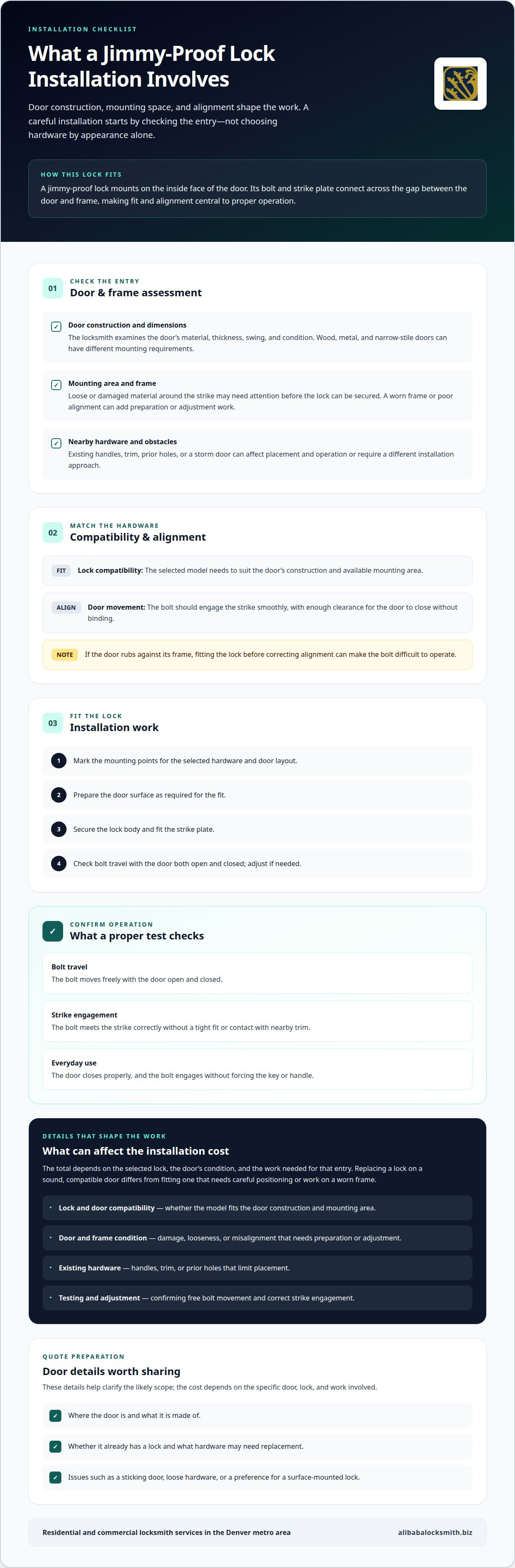
A jimmy-proof lock is mounted on the inside face of a door rather than fitted entirely within its edge. Its bolt and strike plate connect across the gap between the door and frame. Because of this surface-mounted design, door construction, mounting space, and alignment are central to a successful installation. In Denver homes, the right approach starts with inspecting the entry, not choosing hardware by appearance alone.
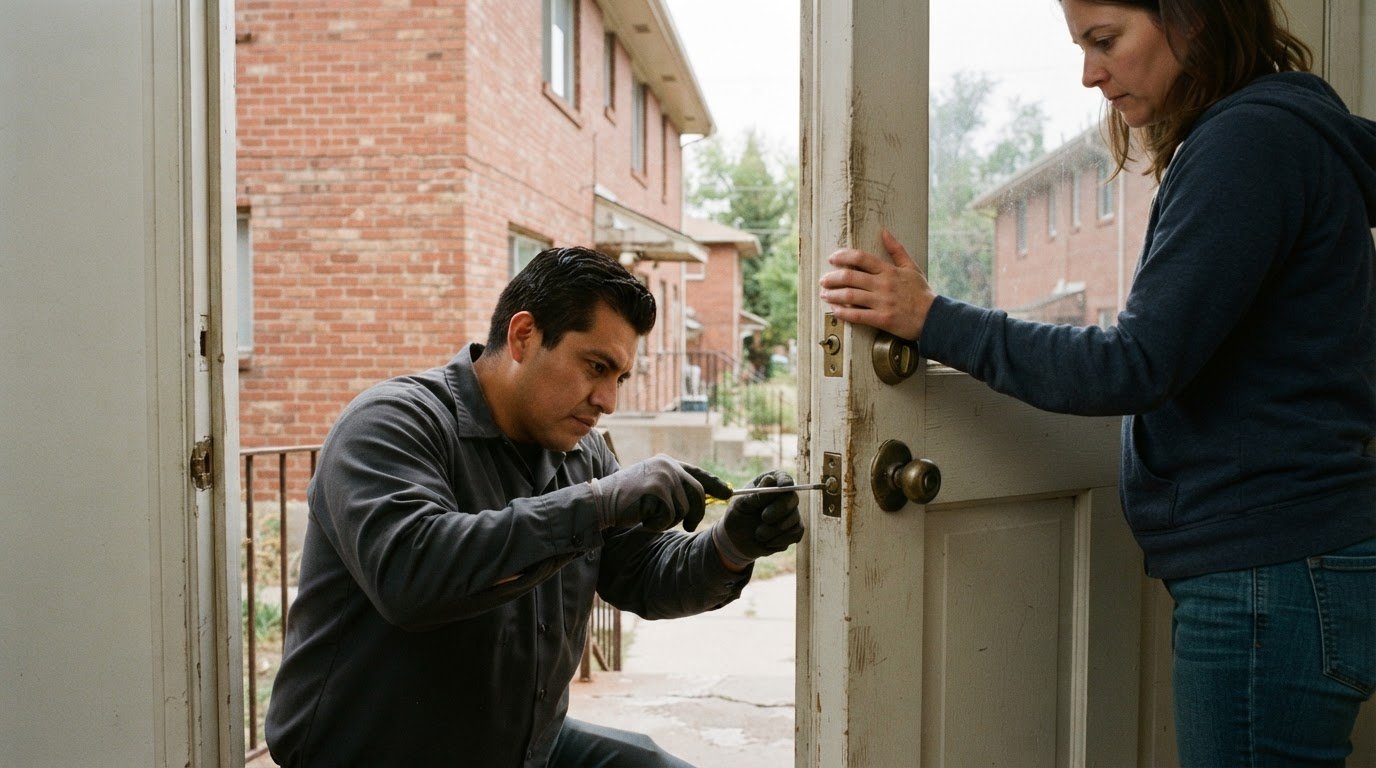
The locksmith examines the door’s material, thickness, swing, and condition. Wood, metal, and narrow-stile doors can each have different mounting requirements. The frame matters too: loose or damaged material around the strike may need attention before the lock can be secured. Existing handles, trim, or a storm door can also affect placement and operation.
Next, the locksmith matches the lock’s design to the door and your needs. The bolt should engage the strike smoothly, with enough clearance for the door to close without binding. If the door rubs against its frame, fitting the lock before correcting the alignment can make the bolt difficult to operate. A professional assesses how the door and lock work together before setting the final position.
Installation generally involves marking the mounting points, preparing the door surface, securing the lock body, and fitting the strike plate. Exact placement depends on the selected hardware and the door’s layout. The installer then checks the bolt’s travel with the door open and closed. Smooth movement in both positions helps identify misalignment, a tight fit, or contact with nearby trim before the work is complete.
The work depends on the conditions found during the inspection. The lock, door material, mounting surface, and any needed adjustments to existing hardware all affect the installation. Replacing a lock on a sound, compatible door differs from fitting one that needs careful positioning or work on a worn frame. The scope should account for the lock and the labor required for that entry.
Lock compatibility: The selected model must fit the door’s construction and available mounting area.
Door and frame condition: Damage, looseness, or poor alignment can add preparation or adjustment work.
Existing hardware: Handles, trim, and prior holes may limit placement or require a different installation approach.
Testing and adjustment: The installer needs to confirm the bolt moves freely and engages the strike correctly.
When requesting a quote, describe where the door is, what it is made of, and whether it already has a lock. Mention issues such as a sticking door or loose hardware to help clarify the likely scope. A professional can assess the entry and identify the lock and installation requirements. The cost depends on the specific door, lock, and work involved.
Choose an installer whose process includes inspecting the door, fitting the lock, and testing its operation. If alignment is overlooked, the bolt may be awkward to use. Ask for a clear explanation of the work and how the lock will be tested. The locksmith should demonstrate that the door closes properly and the bolt engages without forcing the key or handle.
A jimmy-proof lock is one part of an entry’s security, not a fix for every door problem. A weakened frame, loose hinges, or a door that does not close properly can still affect how the lock performs. A professional installation checks the hardware’s fit and operation and identifies conditions that affect the work. This assessment helps match the lock and installation plan to the actual door.
Ali Baba Locksmith
Ali Baba Locksmith provides residential and commercial locksmith services in the Denver metro area. If you’re considering a lock upgrade for a home, rental property, or business entry, a professional assessment can help determine the work your door and lock require.
Describe what you’ve noticed, such as a sticking door, hardware that needs replacement, or a preference for a surface-mounted lock. These details help clarify your installation needs. Ali Baba Locksmith also provides automotive and emergency locksmith services for separate vehicle or lockout concerns.
For guidance on your door and lock installation, contact Ali Baba Locksmith.
Make your next security decision with confidence
A lock choice should support how you use your entry every day, not create a new frustration. Before moving ahead with a jimmy-proof lock installation in Denver, think about what matters most for that door: dependable everyday operation, compatibility with its existing setup, or addressing a particular concern about access. A focused conversation can turn those priorities into a practical plan and help you understand the work involved.
Ali Baba Locksmith can help you arrange professional locksmith support for your upgrade in the Denver metro area. Describe the entry and what you want the lock to address, then contact the team to discuss the installation. Your door’s details can guide the conversation and the work involved.
Contact Ali Baba Locksmith to discuss your lock needs and take a confident step toward a more considered security decision.
Comments