
Professional Deadbolt Installation in Denver: A Step-by-Step Security Guide

A high-end deadbolt is only as strong as the precision of its installation. Many Denver homeowners believe that simply buying a heavy lock from a hardware store guarantees safety, but a misaligned bolt or a wobbly cylinder can leave your front door vulnerable. If you are currently dealing with a sticking latch or searching for reliable home lock repair Denver, you know that security is about more than just hardware. It's about the peace of mind that comes from knowing your door is truly reinforced against entry.
We understand the frustration of confusing ANSI grades and the fear of accidentally ruining a door during a DIY project. This guide shows you how to choose, install, and maintain the right deadbolt to secure your home with professional-grade accuracy. You'll learn the technical differences between lock grades, how to handle Colorado's climate-driven door shifts, and the exact steps to achieve a rock-solid, smooth-operating finish that protects your family for years to come. By the end of this guide, you will have the expert knowledge needed to turn your entryway into a reliable line of defense.
Table of Contents
Home Lock Repair vs. Replacement: When Does Your Denver Home Need a New Deadbolt?
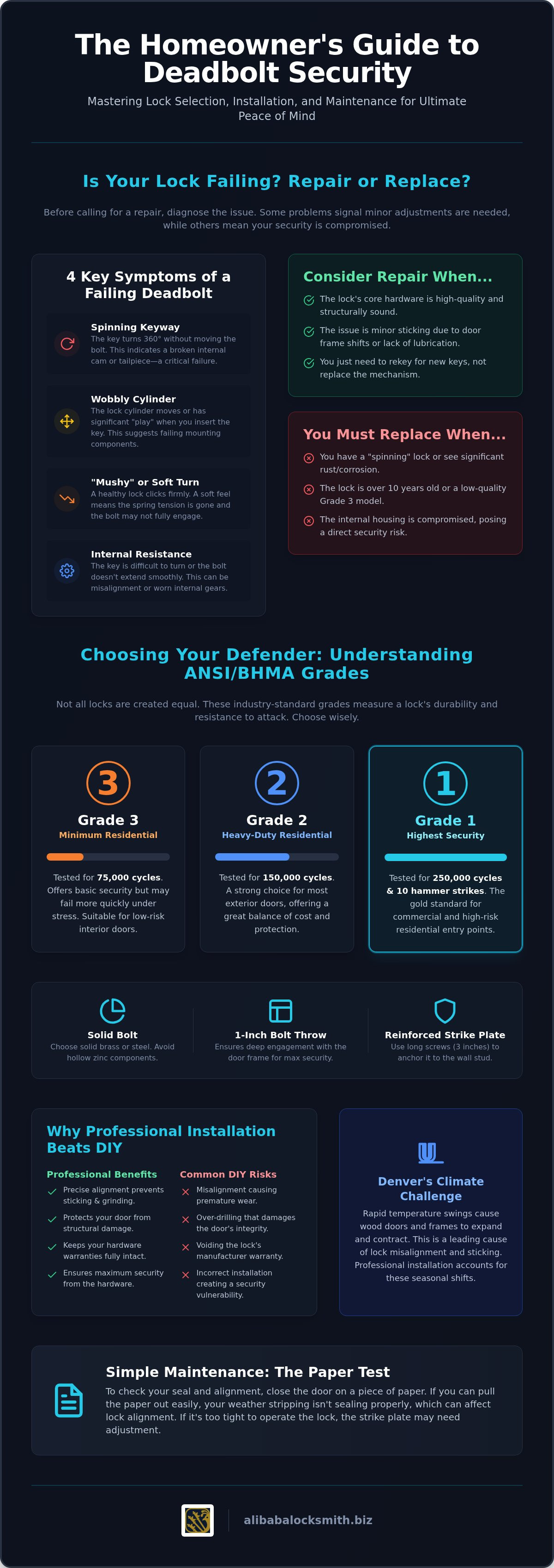
Deciding whether to fix an existing lock or invest in a new one is a common dilemma for local homeowners. Many people assume a sticky lock belongs in the trash, but that isn't always the case. When you seek out professional home lock repair Denver, the first step is a technical assessment of the internal mechanics. Denver's unique environment plays a massive role here. Our rapid temperature swings cause wood doors and frames to expand and contract, which often leads to misalignment rather than a total lock failure.
A standard Deadbolt lock is a mechanical device with moving parts that eventually wear down. If your hardware is over a decade old or carries a Grade 3 rating, it might lack the structural integrity to handle modern security threats. In these cases, a replacement provides a much higher level of protection than a repair. However, if the hardware is high-quality and the issues are purely functional, a skilled technician can often restore it to like-new condition.
Common Symptoms of a Failing Deadbolt
Internal Resistance: If the key is difficult to turn or the bolt doesn't fully extend into the strike plate, the internal gears may be grinding.
Cylinder Play: Visible wear, rust, or a lock cylinder that wobbles when you insert the key suggests the mounting components are failing.
The "Mushy" Turn: A healthy deadbolt should click firmly into place. If yours feels soft or lacks a distinct engagement point, the spring tension is likely gone.
Spinning Keyways: When the key turns 360 degrees without moving the bolt, it usually indicates a broken tailpiece or a disconnected internal cam.
These symptoms often point to mechanical fatigue. While some can be addressed through part replacement, a "spinning" lock or significant rust usually means the structural housing is compromised. At this stage, your home's security is at risk, and a full replacement is the most reliable path forward.
When Home Lock Repair is the Right Move
Repair is often the best choice when the lock's core is still solid. Minor sticking is frequently caused by a lack of proper lubrication or a slight shift in the door frame. Tightening loose mounting screws or filing down a strike plate that has moved by a fraction of an inch can solve many operational headaches without the cost of new hardware. If your hardware is physically sound but you're worried about who has copies of your keys, you don't need a new lock. You can simply opt for rekeying vs. changing locks to secure your home quickly and affordably. Home lock repair Denver services are ideal for preserving high-end architectural hardware while ensuring the mechanism remains smooth and reliable.
Choosing the Best Deadbolt for Denver Homes: Grades and Features
Is your current lock truly protecting your home, or is it just a visual deterrent? Many big-box retail locks are surprisingly easy to bypass. When you're considering home lock repair Denver, the quality of the replacement hardware dictates your long-term safety. Selecting the right deadbolt requires looking past the finish and focusing on the internal engineering that prevents forced entry.
Understanding ANSI Grades
The American National Standards Institute (ANSI) and the Builders Hardware Manufacturers Association (BHMA) test locks for durability, strength, and security. According to , these ratings are the most reliable way to judge a lock's performance before it's installed on your door.
Grade 1: This is the highest level of residential security. It's tested to withstand 250,000 cycles and 10 massive impacts. It's the gold standard for high-traffic or high-risk entry points.
Grade 2: These are heavy-duty residential locks. They're tested for 150,000 cycles and are suitable for most Denver exterior doors, offering a great balance of cost and protection.
Grade 3: This is the minimum standard for residential use. While they meet basic requirements, they're tested for only 75,000 cycles and may fail more quickly under stress.
Essential Hardware Features to Look For
Beyond the grade, specific hardware features determine how well a lock resists physical attacks. A high-quality deadbolt should feature a solid brass or steel bolt. Avoid hollow zinc components, as they're much easier to snap or saw through. Look for a bolt with a full 1-inch "throw," which means the bolt extends an entire inch into the door frame. This depth is critical for kick-in resistance.
Anti-Drill Features: These locks contain hardened steel chips or plates that shatter drill bits, preventing an intruder from drilling out the cylinder.
Anti-Pick Pins: Specialized internal pins make it significantly harder for someone to use traditional picking tools to gain entry.
Reinforced Strike Plates: A lock is only as strong as the frame. Always use a heavy-duty strike plate anchored with 3-inch screws that reach into the structural wall stud.
Modern homeowners often choose between traditional mechanical locks and smart lock options. Mechanical deadbolts offer unmatched reliability and don't require batteries, while smart locks provide convenience through keyless entry and activity logs. Properly graded hardware reduces the need for frequent home lock repair Denver by standing up to daily use. If you aren't sure which hardware fits your door's thickness or material, our mobile team can bring professional-grade residential security upgrades directly to your doorstep for a perfect fit.
Step-by-Step Guide to Professional Deadbolt Installation
A secure home starts with a flawless installation. While many homeowners reach out for home lock repair Denver when their hardware starts sticking, most of these issues trace back to a rushed or imprecise initial setup. Installing a deadbolt with professional-grade precision ensures the mechanism operates without friction, which significantly extends the life of the lock. Every millimeter matters when you're aligning hardened steel components against a shifting door frame.
Measuring for a Perfect Fit
Success begins before you even open the hardware packaging. You must verify the "backset," which is the distance from the edge of the door to the center of the pre-drilled hole. Most Denver homes utilize a standard backset of either 2-3/8 inches or 2-3/4 inches. If this measurement is off by even a fraction, the bolt won't sit flush. You also need to confirm your door thickness. Standard residential doors are typically 1-3/8 inches or 1-3/4 inches thick. If your door is thicker, you'll need specialized long-tailpiece hardware to ensure the interior and exterior cylinders connect securely.
Once measured, prep the door by cleaning out any wood shavings or debris from existing bore holes and mortises. Insert the bolt mechanism first. It should slide in easily and sit perfectly horizontal. If you have to force it, the hole might be slightly misaligned, which will eventually lead to mechanical failure. Test the bolt's movement with a screwdriver before mounting the cylinders to ensure there is zero resistance. If the wood is stripped or cracked from a previous installation, seeking a home lock repair Denver expert to reinforce the door can prevent future structural issues.
The Critical Role of the Strike Plate
The strike plate is the most overlooked component of home security. A high-quality deadbolt is useless if the strike plate is only held in by half-inch screws that barely grip the decorative trim. For true security, 3-inch screws are non-negotiable. These screws must pass through the door jamb and anchor deep into the structural wall stud behind it. This creates a reinforced connection that resists heavy impacts and kick-in attempts. For more on comprehensive protection, see our Residential Locksmith Denver pillar.
Finally, mount the exterior and interior cylinders. Ensure the tailpiece, which is the flat metal bar connecting the two halves, is correctly timed or oriented according to the manufacturer's specs. If it's turned the wrong way, the key might get stuck or the thumb-turn won't rotate fully. Once the cylinders are snug, align the strike plate so the bolt enters the center of the "dust box." If the hole in the frame isn't deep enough for the bolt to extend fully, the lock won't actually engage its internal deadlock feature, leaving your home vulnerable.
Testing and Maintaining Your New Door Security
Once the mounting screws are tight, your work isn't quite finished. You must verify that the hardware functions perfectly under real-world conditions. Many urgent calls for home lock repair Denver occur because a lock worked fine during a mild afternoon but seized up during a cold front. Testing ensures the bolt isn't just entering the strike plate, but that it's fully engaging the internal deadlocking mechanism without any friction.
Perform the "paper test" to check for binding. Close your door and turn the deadbolt to the locked position. If you have to pull, push, or lift the door handle to get the key to turn smoothly, your strike plate is misaligned. A perfectly installed bolt should slide into the frame with zero resistance. If you feel even a tiny "catch," the bolt is rubbing against the plate, which will eventually wear down the internal gears and lead to a mechanical failure.
Seasonal Adjustments for Denver Homes
Denver's climate is notoriously dry, and this lack of humidity has a direct impact on your door's structural integrity. Wooden doors act like sponges; they shrink during our arid winters and swell when the spring rains arrive. This constant movement can shift your lock's alignment by several millimeters in a single season. If your bolt starts sticking as the weather changes, you likely need a minor strike plate adjustment rather than a full replacement. However, if you notice that multiple locks in your home are misaligned simultaneously, it may indicate a shifting foundation. In these scenarios, professional lock realignment is necessary to prevent permanent damage to your high-end hardware.
Routine Maintenance Tips
Keeping your security hardware in top shape doesn't require much time, but it does require the right materials. Use these simple steps to extend the life of your deadbolt:
Lubricate Annually: Apply a dry graphite or Teflon-based lubricant to the keyway once a year. Avoid WD-40 at all costs. While it provides a temporary fix, WD-40 is a solvent that attracts dust and eventually turns into a sticky gunk that ruins the internal pins.
Check Your Keys: Inspect your keys for "burrs," sharp edges, or slight bends. A damaged key acts like a saw inside your cylinder, slowly destroying the delicate wafers or pins every time you lock the door.
Clean the Faceplate: Wipe down the exterior of the lock with a damp cloth. Never use harsh chemical cleaners or abrasive pads, as these can strip away the protective finish and lead to premature rusting.
If your hardware feels loose or "jiggly" even after you've tightened the mounting screws, it's a sign that the internal housing is wearing out. Don't wait for a total lockout to address the issue. Contact Ali Baba Locksmith for a professional home lock repair Denver assessment to ensure your entryway remains a solid line of defense.
Why Professional Denver Locksmith Installation Beats DIY
While hardware stores make deadbolt installation look like a simple fifteen-minute task, the reality is often more complex. Professional home lock repair Denver experts frequently see the aftermath of DIY attempts that went wrong. It's not just about getting the screws in. It's about structural integrity, technical precision, and long-term reliability. When you hire a professional, you're investing in the knowledge that your home's primary defense is actually working as intended.
A professional locksmith doesn't just install hardware; they troubleshoot the entire entryway. If your door is sagging or the hinges are loose, a specialist identifies these issues immediately. They also ensure your manufacturer's warranty remains valid. Many high-end hardware brands require professional installation to cover mechanical failures. If you install it yourself and the internal cam breaks six months later, you might be stuck paying for a full replacement out of pocket.
The Risk of Improper DIY Installation
One of the most significant risks of a DIY project is "door splitting." This happens when a hole is drilled at a slight angle or mounting screws are over-tightened into a wooden door, causing the grain to crack. Once a door is split, its strength is permanently compromised, making it easier for an intruder to bypass. Other common DIY pitfalls include:
Misaligned Bolts: If the bolt doesn't hit the exact center of the strike plate, it's vulnerable to a pry bar or heavy impact.
Electronic Damage: Modern smart locks have delicate wiring. Pinched cables or static discharge during installation can fry the electronics before you even use the lock.
Timing Issues: If the internal tailpiece is set incorrectly, you might find yourself locked out because the key won't turn the bolt fully.
These mistakes often lead to a more expensive home lock repair Denver call-out later. A professional has the specialized jigs and boring tools to ensure every cut is clean and every hole is perfectly centered. This precision prevents the "jiggling" and resistance that eventually lead to mechanical failure.
Schedule Your Professional Installation with Ali Baba Locksmith
While this guide focuses on local needs, homeowners in other regions can find similar high-quality support; for instance, libertydoorrepair.com provides professional residential and commercial door services for those in the Atlanta area.
We bring the shop directly to your door. Our mobile service covers the entire Denver Metro area, providing the ultimate convenience for busy residents. We arrive with professional-grade tools and a deep understanding of Colorado's local housing styles. During our visit, we don't just focus on the one lock. We provide a comprehensive security assessment of all entry points to identify any other potential vulnerabilities. This proactive approach ensures your family is protected by more than just a piece of metal. It's about the peace of mind that comes from knowing the job was done right the first time. Secure your home today with Ali Baba Locksmith and experience the difference that professional precision makes.
Protect Your Denver Home with Professional Precision
Your home's security is only as reliable as the deadbolt protecting your front door. By choosing high-quality ANSI-graded hardware and ensuring a precise installation, you create a formidable barrier against forced entry. Remember that Denver's dry climate requires regular attention to door alignment and proper lubrication to prevent mechanical fatigue. Whether you need a simple home lock repair Denver or a complete hardware overhaul, professional expertise ensures that your warranty stays intact and your door remains structurally sound.
Since 2018, Ali Baba Locksmith has provided expert mobile solutions directly to your doorstep. We specialize in residential security upgrades and on-site repairs, bringing the technical skill needed to handle Denver's unique housing styles. Don't leave your safety to chance with a DIY mistake or a wobbly lock cylinder. Our team is ready to provide the peace of mind you deserve with a rock-solid installation that lasts for years. We're committed to keeping our community safe one door at a time.
Book Your Professional Deadbolt Installation in Denver Now and take the first step toward a more secure home today.
Frequently Asked Questions
How much does it cost to have a deadbolt installed in Denver?
The cost of deadbolt installation depends on the hardware grade you select and whether the door requires new bore holes. Since every home has different security needs, we assess the door material and frame condition before providing a professional estimate. Factors like high-security strike plates or smart lock integration can also influence the final investment. We focus on providing durable solutions that reduce the long-term need for frequent home lock repair Denver services.
Can I install a deadbolt on a door that only has a handle lock?
You can definitely add a deadbolt to a door that currently only features a handle lock. This process is known as a fresh installation and involves precisely boring two new holes: one through the door face and another into the edge for the bolt. Our mobile team uses professional jigs to ensure these holes align perfectly with your door frame. This upgrade provides a significant boost to your home's physical security and structural integrity.
What is the difference between a single-cylinder and double-cylinder deadbolt?
A single-cylinder deadbolt uses a key on the exterior and a thumb-turn on the interior, while a double-cylinder model requires a key for both sides. While double-cylinder locks offer more protection for doors with glass panes, they can pose a safety risk during emergencies. Denver building codes generally require egress doors to be openable from the inside without a key. We recommend choosing hardware that balances high-level security with essential life-safety requirements.
How long does a professional deadbolt installation take?
A professional deadbolt installation typically takes between 30 and 60 minutes per door. This timeframe includes the removal of old hardware, any necessary door prep or mortising, and the final alignment of the strike plate. If we are performing a fresh installation on a door without existing holes, it may take slightly longer. Our goal is to ensure the mechanism operates perfectly before we leave, preventing future issues that require home lock repair Denver.
Should I choose Schlage or Kwikset for my Denver home?
Both brands offer reliable residential options, but they cater to different needs and budgets. Schlage is often preferred for its heavy-duty internal components and higher-grade residential ratings. Kwikset is a popular choice for homeowners who want the convenience of specialized technology for easy rekeying. We evaluate your existing door hardware and security goals to help you choose the brand that best suits your specific property and Colorado's unique climate conditions.
Does a deadbolt really make my home more secure?
A deadbolt is the most effective way to improve your home's resistance to forced entry. Unlike standard spring-latch handle locks, a deadbolt cannot be shimmied open with a credit card or small tool. When paired with a reinforced strike plate and three-inch screws, a deadbolt distributes the force of an impact across the structural wall stud. This makes it significantly harder for an intruder to kick in the door or bypass the lock mechanism.
What happens if my door frame is too thin for a high-security strike plate?
If your door frame is too thin for a standard high-security strike plate, we use specialized reinforcement hardware. This might include a wrap-around plate or an extra-long strike that anchors deeper into the wall's jack stud. We focus on creating a solid connection that doesn't split the wood. Proper anchoring is essential for ensuring the deadbolt provides the level of protection it was designed for, even in older or custom-built Denver homes.
Can you install a smart deadbolt on an older Denver bungalow door?
Smart deadbolts can be installed on older bungalow doors, though these classic entryways often require minor adjustments first. Older doors frequently settle or warp over time, which can cause the motorized bolt of a smart lock to jam. We perform the necessary alignment work to ensure the door closes smoothly and the lock operates without friction. This allows you to enjoy modern keyless convenience while preserving the historic character of your classic property.


Comments