
Smart Key Duplication and Programming in Denver

A replacement car key is more than a piece of cut metal. Smart key duplication in Denver can involve cutting a key and programming its chip or fob to communicate with the vehicle. Traditional keys, transponders, remote fobs, smart keys, and electronic access keys each have different requirements.
Need a new key? The right solution depends on the key type and the vehicle system it needs to work with. Most modern car keys have a chip that must be programmed for the key to start the vehicle. A smart key must also communicate with the car’s onboard computer.
This guide explains which keys can be duplicated or programmed across the Denver metro area, how the process differs by key type, and what to consider if a key is lost, damaged or no longer working. You’ll also learn how fobs communicate with vehicles and what steps can help restore access without confusion.
Table of Contents
Car key and transponder duplication
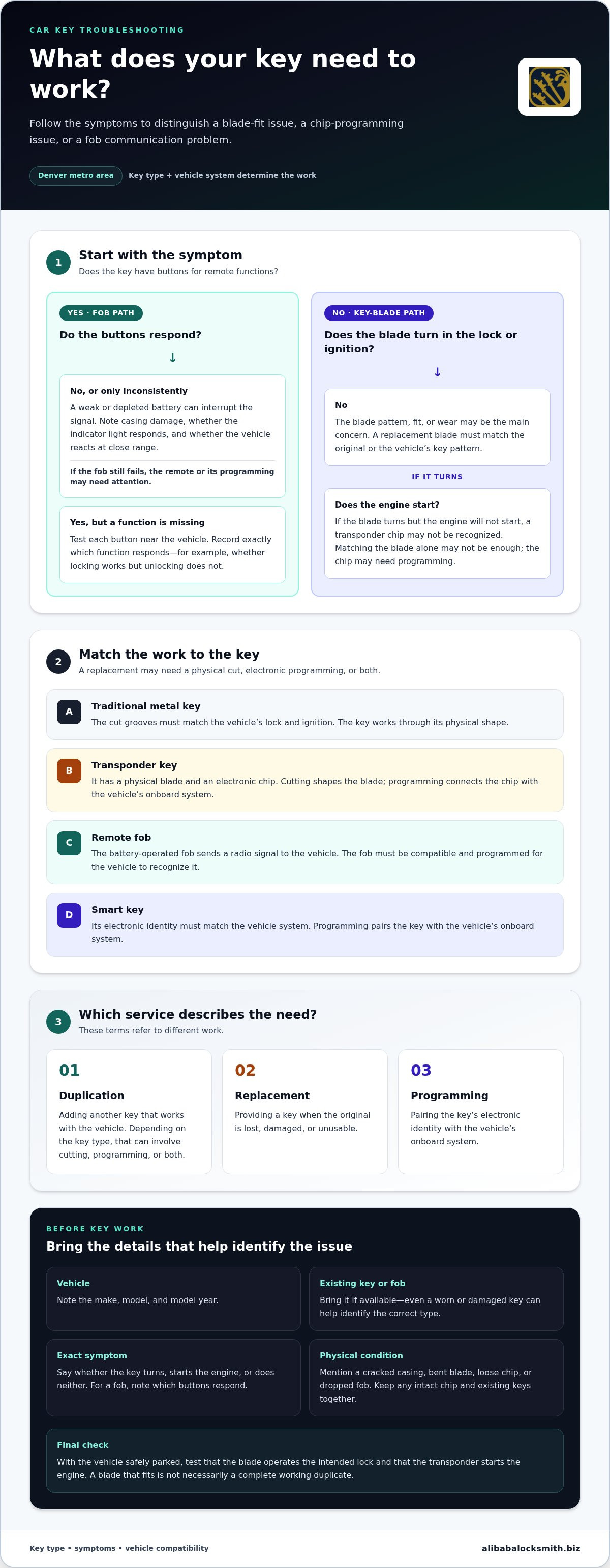
A traditional metal key works through its cut shape: the grooves must match the vehicle’s lock and ignition. A transponder key adds an electronic chip, so matching the blade alone may not be enough. Most modern car keys have a chip that must be programmed for the key to start the vehicle. That’s why a newly cut key may turn in the ignition but fail to start the engine.
Duplication starts with identifying the key type and vehicle. A technician examines the existing key, if available, and determines whether it has a transponder. The replacement blade is cut to match the original or the vehicle’s key pattern. If the key contains a chip, programming connects it with the vehicle’s onboard system. Cutting and programming are separate tasks, and a working spare may require both.
For a useful assessment, gather a few details before arranging key work:
Vehicle identification: Note the make, model, and model year. These details help distinguish different key designs.
Available key: Bring the working key if you have one. A worn or damaged key can still help identify the correct type.
What happens: Describe whether the key turns, starts the engine, or does neither. Each symptom points to a different part of the process.
Key condition: Mention a cracked casing, bent blade, or loose chip. Physical damage can affect handling and identification.
Consider a vehicle whose metal blade turns but whose engine won’t start. The blade may fit the ignition while the transponder remains unrecognized. Cutting another blade to the same shape won’t solve that programming issue. Conversely, if a cut key won’t turn, the blade pattern or wear may be the main concern. Distinguishing these symptoms helps clarify whether the job involves cutting, programming, or both.
A locked vehicle presents a different problem from a missing transponder key. A key that opens a door may still lack the chip authorization needed to start the vehicle. Similarly, replacing a damaged key shell doesn’t automatically replace or program its electronic component. Keep any intact chip and existing keys together for assessment. If every key is lost, the vehicle’s make, model, and year are especially useful starting details. Adding keyless entry to a standard metal key may involve more than cutting a new key.
Before relying on a duplicate, test its fit and starting function with the vehicle safely parked. Confirm that the blade operates the intended lock and that the transponder starts the engine. This check distinguishes a complete duplicate from a key that only matches the blade.
Key fobs
A car key fob is a battery-operated device programmed to interact with a vehicle’s onboard computer. Pressing a button sends a radio signal to the car’s antenna. If the vehicle’s software recognizes the signal, it initiates the corresponding function. Remote locking and unlocking are common keyless-entry functions, while the available buttons depend on the vehicle and fob.
This electronic connection explains why a fob can look intact yet fail to operate the car. A weak or depleted battery can interrupt its signal, and keyless-entry batteries can run out with little or no notice. If the buttons stop responding, note whether the casing is damaged, whether the indicator light responds, and whether the vehicle reacts at close range. These clues can help distinguish a likely battery issue from a fob that needs programming attention.
For a duplicate or replacement fob, the vehicle’s system matters as much as the remote’s shape. A fob must be compatible with the vehicle and programmed to communicate with its onboard computer. A similar-looking remote may not send a signal the car recognizes. Keep the existing fob, if available, and note the vehicle’s make, model, and year when arranging service. These details help identify the right match and programming work.
After service, test each button near the vehicle and observe the result. Check the functions on that particular remote, such as locking and unlocking. If a button works inconsistently, describe exactly what happens rather than simply saying the fob is broken. For example, say whether the lock button responds but unlock does not, or whether neither works. Clear symptoms help narrow down whether the issue involves battery power, the remote, or communication with the vehicle.
Fob works only nearby: Note the distance and which buttons respond. Signal behavior can help describe the fault.
Buttons stop responding: Mention whether the fob was dropped or its casing was damaged.
A spare is needed: Bring the working fob and vehicle details to help match the replacement.
Remote functions fail after programming: Test each button and report the specific function that did not respond.
Electronic fobs can bring higher repair and replacement costs than simpler keys, so identifying the fault before replacing parts matters. If the fob problem is part of a vehicle-key issue, automotive locksmith assistance can help address the key and its electronic access functions.
Smart key duplication and programming in the Denver metro area
A smart key must match the vehicle’s electronic system, not just its appearance. In the Denver metro area, the key type, available keys, and vehicle details shape the work.
Duplication, Replacement, and Programming Differences
Duplication means adding a smart key that works with the vehicle. Replacement means providing a key when the original is lost, damaged, or unusable. Programming pairs the key’s electronic identity with the vehicle’s onboard system. The first question is whether an existing key still works or the vehicle needs a new key configured from scratch.
Required Information and Proof of Ownership
Prepare the vehicle’s make, model, and year, plus its vehicle identification number if available. Have photo identification and registration or a title connecting you to the vehicle. These details help identify the correct key system and establish that you’re authorized to access the vehicle. Keep any working smart key available, since it can help clarify the issue.
Risks of Cheap or Improper Programming
A low-cost key that doesn’t match the vehicle’s system may fail to start it or operate its remote functions. Incorrect programming can also leave a new key unrecognized, requiring further diagnosis. Test the starting and available lock functions before relying on a duplicate. If a key was lost or stolen, ask about erasing it from the vehicle’s computer so it can no longer start the car.
Duplication Versus Full Replacement
A working smart key with a damaged casing or one failing function may call for repair or duplication rather than replacing every key. If the key is missing, broken beyond use, or no longer recognized, replacement and programming may be needed. Describe which buttons respond, whether the vehicle starts, and when the problem began. These details help distinguish a key issue from a vehicle response issue.
How long does smart key duplication and programming take in Denver? The time depends on whether a working key is available, whether a compatible replacement must be matched, and how the vehicle’s system responds during programming and testing. Losing every key involves different steps from adding a duplicate, so share that detail when arranging locksmith service.
For a Denver metro appointment, gather the vehicle details, identification, ownership documents, and any remaining keys before work begins. After programming, test the new key with the vehicle present: confirm that it starts the car and operates its intended functions. This check can reveal a mismatch before you depend on the key for a commute or leave the vehicle locked.
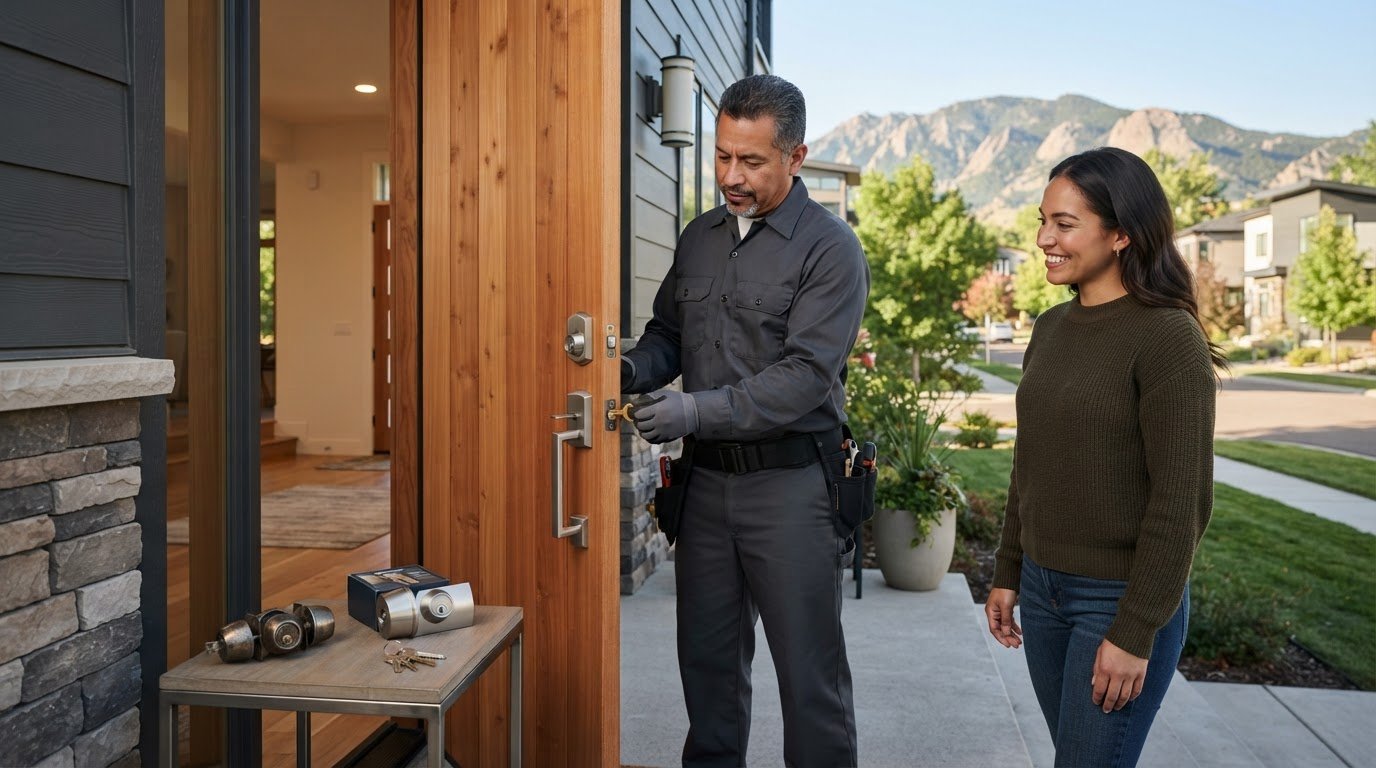
Smart-lock and electronic-access key duplication
A home smart lock or commercial access system may use a metal key, key fob, access card, keypad code, or mobile credential. These credentials aren’t duplicated in the same way. Copying a cut metal key reproduces its physical pattern, while adding a fob may require enrollment through the lock’s approved access controls. Identify the credential type before deciding what work is needed.
For electronic credentials, duplication often means authorizing another credential rather than copying the original signal. The lock or access system must recognize the new fob or card. An administrator may add it through the system’s programming process, then test that it grants the intended access. A replacement credential may be needed if the old one is damaged, missing, or no longer recognized.
Start by identifying the lock brand and model, then describe the credential and its symptoms. A keypad that accepts a code but won’t unlock needs a different assessment from a card reader that ignores its card. Keep the working credential available, if possible, and note which door or entry point it operates. These details help distinguish a credential issue from a problem with the lock or reader.
Metal key: Match the physical keyway and cut pattern to the lock.
Fob or card: Identify the system and enroll a compatible credential.
Keypad code: Determine whether the system needs a new authorized code or service.
Mobile credential: Identify the access system and the account or device used for entry.
Lost credentials call for a security review, not just a spare. If a fob or card is missing, an administrator can remove its access through the system when that function is supported. Then test the remaining authorized credentials at the relevant entry points. For example, confirm that a current staff card still opens the intended commercial door after access changes.
Before relying on a new credential, test it at the exact lock or reader it must operate. Check that it grants the expected access and doesn’t open an unintended entry point. If the lock also accepts a physical key, test that key separately. Keep a record of which credential belongs to each user or door to make future replacement easier to manage.
Compatibility depends on the lock or access system, credential type, and enrollment method. A similar-looking fob may not work with a particular reader, just as a keypad code cannot serve as a physical key. Share the lock’s make and model, the credential type, and the access problem. Those specifics help determine whether duplication, replacement, or system programming is the appropriate next step.
What is the difference between smart key duplication, replacement, and programming?
These terms describe different parts of getting a smart key working. Duplication adds a key, replacement provides one when the original is unusable, and programming pairs its electronic identity with the vehicle. Knowing which step you need helps explain the problem clearly and avoid treating every key issue as a cutting task.
Duplication creates an additional key while you still have a working one. The new key must match the vehicle’s system, and its buttons and starting function should be tested. Replacement addresses a missing, damaged, or unrecognized key. It may involve providing a compatible key and preparing it for the vehicle. Programming is the electronic process that enables the vehicle to recognize the key.
One job can involve more than one step. For example, a new smart key may need to be matched to the vehicle and programmed before it can start the car. A working original with a cracked casing is a different situation from losing every key. Describe what remains usable: the buttons, the key’s physical condition, and whether the vehicle starts.
Working key, need a spare: Ask about duplication and test the new key’s start and remote functions.
Key lost or unusable: Explain that you need a replacement, and share the vehicle’s make, model, and year.
Key present, vehicle does not recognize it: Describe the symptoms and ask about programming.
Buttons fail but the car starts: Report which functions respond, since remote operation and starting can behave differently.
Use the symptoms to narrow down the task, not just the key’s appearance. A smart key that unlocks the doors but won’t start the vehicle may have a different issue from one that does neither. A damaged casing can also affect button use without proving that the electronic key has failed. Keep the original key and any spare together for assessment.
Before work begins, provide the vehicle details and say whether you have a working key. Afterward, test the result with the vehicle present. Confirm that the new key starts the car and that each intended remote function responds. If the key fails one test, explain exactly which one rather than saying only that it doesn’t work. Clear details help distinguish duplication, replacement, and programming needs.
If you need help identifying the right step for your vehicle, get assistance with a vehicle key.
Ali Baba Locksmith: Automotive Locksmith Services
Ali Baba Locksmith provides Automotive Locksmith Services for drivers dealing with a lost, damaged, or unresponsive vehicle key. If you’re unsure whether your car needs a duplicate, replacement, or programming, share what the key does and your vehicle details. This helps focus the service on the problem you’re experiencing.
Turn to Ali Baba Locksmith when a key won’t start the car, a fob no longer responds, or you need help restoring vehicle access. For a locked-out vehicle, Emergency Locksmith Services may also help. Clear details about the key and its symptoms help guide the next step.
Contact Ali Baba Locksmith to discuss your vehicle-key needs, or visit alibabalocksmith.biz.
Plan Ahead for Your Next Key
A spare smart key is easier to arrange before a lost or damaged key disrupts your plans. Note your vehicle details and keep any working keys together so you can explain your needs clearly when arranging service. For smart key duplication in Denver, describe your vehicle and what you need the key to do.
Ali Baba Locksmith offers Automotive Locksmith Services for vehicle-key needs, alongside Commercial Locksmith Services and Residential Locksmith Services. Choose the support that fits your lock or access issue, and share the details that will help define the task.
Start the conversation when you’re ready. Contact Ali Baba Locksmith today to discuss your locksmith needs and move toward a practical next step.
Frequently Asked Questions
Need a new car key today?
Contact an automotive locksmith and share your vehicle’s make, model, and year. Explain whether you need a spare, have a damaged key, or have lost every key. Provide your location in Denver and say whether the vehicle is accessible. These details help clarify the work involved and whether you need a cut key, a programmed key, or both.
Where can I get a smart key duplicated in Denver, Colorado?
Ali Baba Locksmith provides mobile locksmith services in the Denver metro area, including Automotive Locksmith Services. Share your vehicle details and whether you have a working smart key or need a replacement. For example, explain if the key unlocks the doors but won’t start the vehicle. Specific symptoms help describe the service you need and the vehicle-key issue to address.
Which Denver locksmiths and dealerships duplicate smart keys for my car make and model?
Ali Baba Locksmith offers automotive locksmith services, including car key creation for most makes and models. Provide your vehicle’s make, model, and year, and say whether you still have a working key. Mention the key’s functions and the problem you’re experiencing. These details help identify the right automotive key service for your vehicle in Denver.
Can a Denver mobile locksmith program a smart key at my location?
Yes. Ali Baba Locksmith provides mobile locksmith services in the Denver metropolitan area, including automotive locksmith work for vehicle-key needs. Have the vehicle present and share its make, model, and year, along with details about any working keys. After programming, test the key beside the vehicle, including its starting function and the remote features you expect to use.
Can I buy an aftermarket smart key and have it programmed in Denver?
An aftermarket smart key can work if it’s compatible with the vehicle’s make, model, year, and electronic system. A matching shape or button layout alone doesn’t establish compatibility. Bring the key and vehicle details together for assessment, then test the key’s starting and remote functions with the vehicle present. This helps reveal whether the key communicates correctly with the car.
What should I do if my only smart key is lost in Denver?
Contact an automotive locksmith and provide your vehicle’s make, model, year, and location. Explain that no working key remains, since losing every key requires a replacement rather than copying an available key. If the key was stolen, ask about erasing it from the vehicle’s computer so it can no longer start the car. Keep your vehicle information and ownership documents ready.
How long does smart key duplication and programming take in Denver?
The time depends on whether a working key is available, whether a compatible replacement must be matched, and how the vehicle responds during programming and testing. Losing every key involves different steps from adding a duplicate.
Comments