
Avoiding Business Disruption From a Lockout: A Practical Plan

One misplaced key or jammed lock can stall appointments, deliveries, and customer service. Avoiding business disruption from a lockout takes more than keeping a spare key. Employees need clear, safe instructions, managers need to know who can authorize access, and essential work needs a plan to keep moving while the issue is resolved.
A lockout can create pressure to act quickly, but unclear roles and improvised entry attempts may add risk and delay. A practical response plan helps your team account for employees, redirect urgent work where possible, and arrange professional help when access can’t be restored safely.
This guide covers backup access, key control, downtime, and secure re-entry. It also explains how a mobile locksmith can help on-site with commercial lock solutions, repairs, or installation. Clear responsibilities and a recovery plan help your business respond confidently while access is restored.
Table of Contents
How a Business Lockout Disrupts Operations in Denver
Business lockout disruption is an interruption to normal work because authorized employees can’t enter a business or reach an area they’re permitted to use. A blocked entrance can prevent staff from opening, while a locked interior room may keep them from equipment, records, supplies, or other work essentials.
The impact depends on which entrance or area is affected. If one employee can’t open a single office but others can safely continue their work, the disruption may be limited. If the affected door is the only practical entrance or leads to a space essential to the day’s work, delays can spread across teams. Appointments may need to change, and deliveries may be difficult to receive or secure.
For a Denver business, the effects also depend on the work taking place. A customer-facing business may need to update visitors if staff can’t reach reception. A team may need to pause a task if tools or records are behind a locked door. Identify essential functions in advance so you know what needs access and what can continue safely.
Which business activities are most vulnerable to lost access?
Start with work that depends on a particular entrance, room, person, or item. Opening procedures, customer appointments, delivery handling, and work in restricted areas may all be affected. Delays can cascade: staff can’t retrieve equipment, the next task can’t begin, and a scheduled customer may have to wait or reschedule. List the functions that must continue, where they happen, and the access each requires.
Customer service, appointments, and front-desk operations
Receiving, storing, or dispatching deliveries
Work that depends on secured equipment, supplies, or records
Tasks that require access to restricted rooms or work areas
Does every lockout require the business to close?
No. The effect depends on which entrance or area is affected, which employees are blocked, and whether a safe alternate route is available. A temporary workflow change may work if authorized access to other areas supports the task. But don’t assume operations can continue if entry, site security, or safe use of the premises is in question. Assess the situation before deciding what work can responsibly proceed.
Access problems can also have financial consequences beyond immediate delays. The overview of business interruption insurance explains the general subject; actual coverage depends on the policy. For operational planning, focus first on what is inaccessible, who needs to know, and which work can continue without compromising safety or security.
Why Business Lockouts Happen, and What Makes Recovery Harder
A lockout may start with a simple oversight: a key is misplaced, the person carrying it is delayed, or a key no longer works smoothly in the lock. Hardware can also become damaged through wear or an attempted entry. Staff changes can create problems, too. If keys aren’t collected or access records aren’t updated when responsibilities change, employees may be unsure who can enter or approve a solution.
The lock is only part of the problem. Recovery slows down when no one knows who can make decisions, which keys are accounted for, or who should coordinate help. Without a clear lead, updates can be missed and employees may receive conflicting instructions.
How do key-control gaps turn a minor problem into downtime?
An undocumented spare key may seem convenient, but if its location and custody aren’t tracked, employees may waste time searching or be unsure whether it’s safe to use. A key held by someone whose role has changed can add confusion. Name an access coordinator to maintain the key record and direct the response without distributing sensitive details widely.
Documented access roles turn a lockout from a scramble into an orderly response. Keep a current record of who can authorize access, who holds approved keys, and how those responsibilities are handed over when staff or roles change. An untracked spare key isn’t a continuity plan: it may be unavailable when needed and difficult to account for afterward.
What can make a lockout harder to resolve?
A damaged lock may need a different response than a key that’s simply unavailable. Multiple affected doors can complicate the situation, especially if employees aren’t sure which entrances or work areas remain accessible. Unclear authorization can also delay service. Keep access decisions accountable by identifying who can request help and confirm permission to enter.
When arranging assistance, share the business location, the affected door or area, what happened, and whether other entrances are involved. Describe what you observed rather than guessing at the cause. An on-site assessment can determine an appropriate access or repair solution based on the lock’s condition and the situation.
Include access problems in broader business continuity planning. Ready.gov offers guidance for developing and testing continuity plans, which can help managers assign responsibilities before an access issue occurs. For a physical lock problem at a Denver-area business, commercial locksmith support in Denver can help restore access. Clear records and a named coordinator make recovery more manageable while keeping access decisions accountable.
Compare Business Lockout Prevention Options Without Weakening Security
Effective prevention balances readiness with control. A spare key helps only if an authorized person can locate and account for it. An undocumented copy may be missing, held by someone whose role has changed, or impossible to trace. Compare prevention measures by how well they support daily work while keeping access accountable.
When does a controlled spare-key plan make sense?
A spare-key plan is useful when specific authorized employees need backup access. Assign custody to named people, record handoffs securely, and limit access to the record itself. Don’t publish key locations or sensitive access details in general staff documents. Review the arrangement after a role change, lost key, or change in how the business uses its spaces.
Keep the process simple enough to follow. An access coordinator can maintain the record and direct requests without sharing credentials broadly. For wider security planning, this Denver business lock change guide can help frame decisions about business access.
When should a business consider professional lock service?
Routine key reviews and role assignments help prepare for access issues, but they don’t repair a damaged lock or resolve an active inability to enter. If hardware is sticking, visibly damaged, or preventing authorized access, a professional assessment can clarify whether repair or installation is appropriate. Don’t force a door or improvise an entry method, which may cause further damage or compromise security.
Ali Baba Locksmith provides mobile locksmith services in the Denver metropolitan area, including on-site assessment of commercial lock concerns. Share the location, affected door, observed issue, and authorization details so the situation is clear. This Denver locksmith pricing guide offers further context on locksmith pricing. Combining maintained hardware, controlled keys, and clear roles makes lockout preparation more practical without sacrificing accountability.
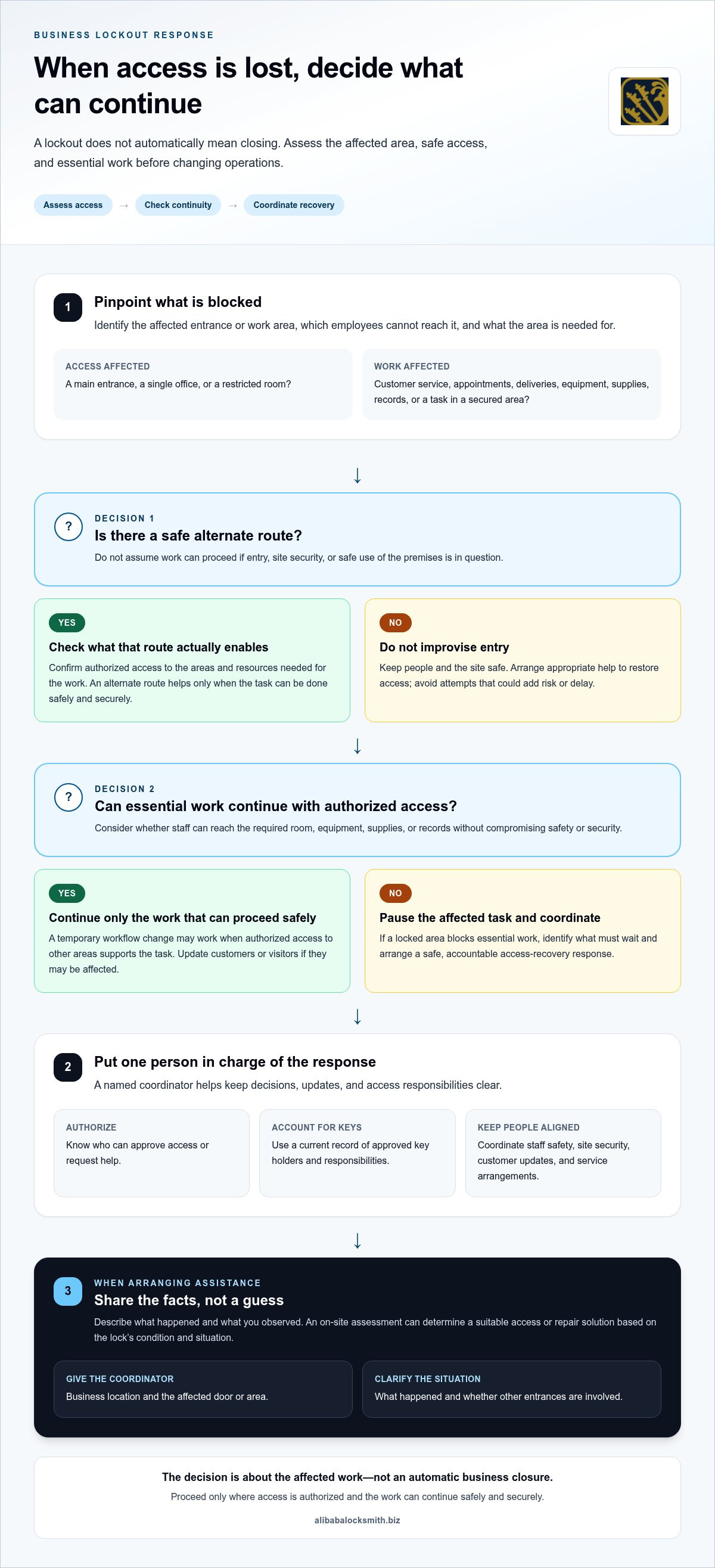
Create a Business Lockout Response Plan Before Access Is Lost
A written response plan gives employees a safe, consistent way to act instead of leaving each person to guess. Assign a lead and backups in advance, then make sure staff know how to reach them and which work procedures apply during an access problem. Keep sensitive access details in a secure place, separate from general employee instructions.
Use this sequence to guide the response:
Assess safety. Check for immediate hazards and follow the business’s safety procedures. Don’t force a door or try an unapproved entry method.
Notify the access lead. The designated coordinator gathers the facts, confirms who is authorized to request access, and keeps the response organized.
Protect the site. Follow site procedures to supervise the affected entrance as appropriate. Limit access attempts to authorized personnel and avoid exposing restricted areas.
Arrange assistance. Coordinate with a locksmith if access can’t be restored safely through approved means. Share the business location, affected door, observed issue, and authorization information.
Document the resolution. Record what happened, what actions were taken, and any changes to keys or access arrangements that need follow-up.
Assign separate responsibilities where possible. One person can update employees, another can contact customers or delivery contacts, and a site lead can oversee security while the access coordinator arranges service. In a small team, one person may hold more than one role, but name a backup so communication and decisions don’t depend on a single employee.
What should employees do while access is being restored?
Employees should follow the business’s safety and communication procedures, check in with the designated lead, and avoid forcing doors or attempting unapproved entry. Managers can use usual communication channels to update customers about appointment changes and inform delivery contacts about receiving arrangements. Keep updates factual and avoid sharing sensitive site details.
How should managers protect security during a lockout?
Limit access attempts to authorized people and supervise affected entrances according to site procedures. Don’t send keys, entry codes, or sensitive location details through insecure channels. If a key is lost or its custody is uncertain, review access permissions after the incident and decide whether the business’s access arrangements need attention.
Use a short incident record for follow-up: note the affected door or area, when the issue was noticed, who was notified, actions taken, how access was restored, and any key or access changes. The record helps managers identify unresolved risks and improve procedures. A clear plan makes a lockout easier to manage while keeping safety and security in view.
For on-site commercial lock support in the Denver metropolitan area, explore mobile locksmith support in Denver. If a business lockout needs professional attention, connect with a Denver mobile locksmith.
Restore Secure Business Access With a Denver Mobile Locksmith
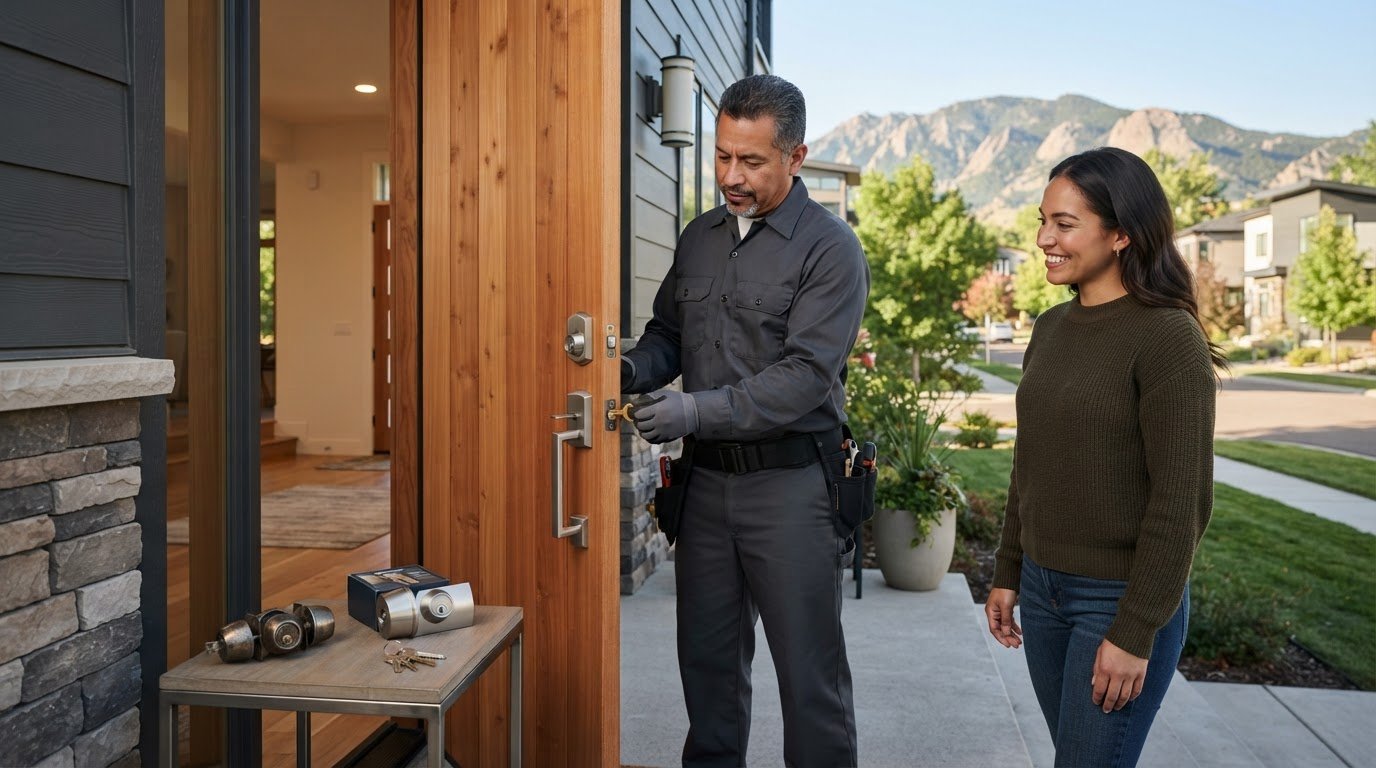
When employees can’t enter a business or reach a locked work area, a mobile locksmith can bring commercial lock expertise to the location. Ali Baba Locksmith provides on-site commercial lock solutions in the Denver metropolitan area, including lock repairs and installations. A measured process addresses the access problem while keeping authorization and site security in view.
Provide clear information so the affected lock can be assessed and the next step identified:
Share the problem. Explain where the business is, which entrance or area is affected, and what employees are experiencing.
Establish authorization. Be prepared to show that you’re authorized to enter or arrange service for the business.
Assess the lock. A locksmith evaluates the affected hardware and access issue to determine an appropriate next step.
Address the issue. Depending on the assessment, the work may involve restoring access, lock repair, or installation.
What information helps a locksmith understand a business lockout?
Have the business location, affected entrance, and a clear description of the issue ready. Explain whether employees are unable to enter, the hardware appears damaged, or a lock needs service. Identify your role and be prepared to establish authorization. Share relevant details directly with the service professional, not through public posts or channels that expose sensitive site information.
How can locksmith service support long-term continuity?
Restoring access is only one part of recovery. If hardware contributed to the problem, professional lock repair or installation can address the physical access issue. After the work is complete, update key-control records and note any changes to keys or authorized access. This keeps future decisions grounded in current information rather than outdated assumptions.
A mobile locksmith is one part of a broader continuity plan, alongside clear response roles, employee communications, and controlled key records. The goal isn’t simply to get through one lockout. It’s to make the next access issue easier to assess, address, and document while preserving appropriate security. That approach supports business continuity without relying on untracked keys or improvised entry.
For on-site commercial locksmith support at a Denver-area business, request help with your business lock issue.
Make Access Readiness Part of Your Business Routine
A lockout plan shouldn’t sit untouched in a folder. Review it when staff responsibilities change and during routine premises checks so roles, contact details, and key records stay current. Employees can then follow established steps instead of making access decisions under pressure.
Regular preparation makes avoiding business disruption from a lockout a more achievable part of continuity planning. If a lock or entrance is already affecting work, professional support can help address the physical access issue and identify what needs attention next.
Request on-site locksmith help for your Denver business to address a lock or access problem.
Frequently Asked Questions
What should a business do first when employees are locked out?
First, check that employees are safe and identify exactly which entrance or area they can’t access. Ask staff not to force the door or try improvised entry methods. Have one manager coordinate updates and confirm whether another authorized entrance is available. If customers or deliveries are due, use the business’s usual communication channels to adjust expectations while the access issue is assessed.
Can a business keep operating during a lockout?
Sometimes, but it depends on what’s inaccessible and whether remaining areas can be used safely and securely. Staff might handle calls from an authorized, unaffected workspace, while appointments requiring the locked room may need to move. Don’t assume an alternate entrance or area is suitable. Consider employee access, customer needs, and site security before deciding which work can continue.
How can a business prevent employees from being locked out?
Make access procedures part of routine staff administration. Assign responsibility for issuing and collecting keys, update records when someone changes roles, and tell new employees whom to contact if a key fails. Pay attention to locks that become harder to operate and arrange an assessment before the problem worsens. These habits help prevent lockout disruption without spreading access too widely.
Should a business keep a spare key on site?
A spare can be useful if its custody is controlled, but an untracked key isn’t a dependable backup. Assign it to an authorized person, record changes in responsibility, and keep the record itself secure. Avoid leaving a key in an obvious or publicly accessible place, and don’t circulate its location in general staff messages. Review the arrangement if a key is lost or an employee’s access changes.
Can a locksmith help with a commercial door lockout?
Yes. A commercial locksmith can assess a business door that authorized employees can’t open, as well as hardware that appears damaged or needs service. Ali Baba Locksmith provides mobile commercial locksmith services in the Denver metropolitan area, including on-site lock solutions, repairs, and installations. The person arranging service should be ready to establish authorization and explain which door is affected.
What information should I provide when requesting locksmith help for a business?
Provide the business name and location, the affected entrance or work area, and a clear description of what happened. Mention whether the key is missing, the lock seems damaged, or the door simply won’t open, and share your role at the business. A reliable callback number also helps with coordination. Keep codes, key locations, and other sensitive security details private unless needed, and share them directly with the professional.
How should a business review access after a lockout?
After access is restored, determine whether a key was lost, a handoff was missed, or hardware contributed to the problem. Reconcile who currently holds business keys and update records to reflect any changes made during service. If custody is uncertain, review who remains authorized and whether the access plan needs adjustment. Record the outcome and assign responsibility for follow-up, such as monitoring a repaired lock.

Comments