
Best Lock Types for Home: How to Choose the Right One in 2026

A smart lock isn’t automatically the safest choice for your front door. If you’re comparing deadbolts, keyed-entry sets, and app-enabled options, it’s easy to assume newer technology means stronger protection. But the best lock types for home depend on what each door needs to do, how your household uses it, and whether the hardware fits.
That uncertainty is reasonable. A lock can make access more convenient without being the right match for a side entrance, a busy family routine, or your door’s existing hardware. This guide explains how common lock types differ, what to consider beyond smart features, and how to choose a practical option for each entry point.
You’ll also learn how to compare security grades and check installation details. If you’re upgrading a lock or unsure how the hardware fits, Ali Baba Locksmith provides mobile residential lock installation and repair in the Denver metropolitan area. The goal is a lock that supports your security and everyday routine, not technology for its own sake.
Table of Contents
What makes a home lock a good fit for your security needs?
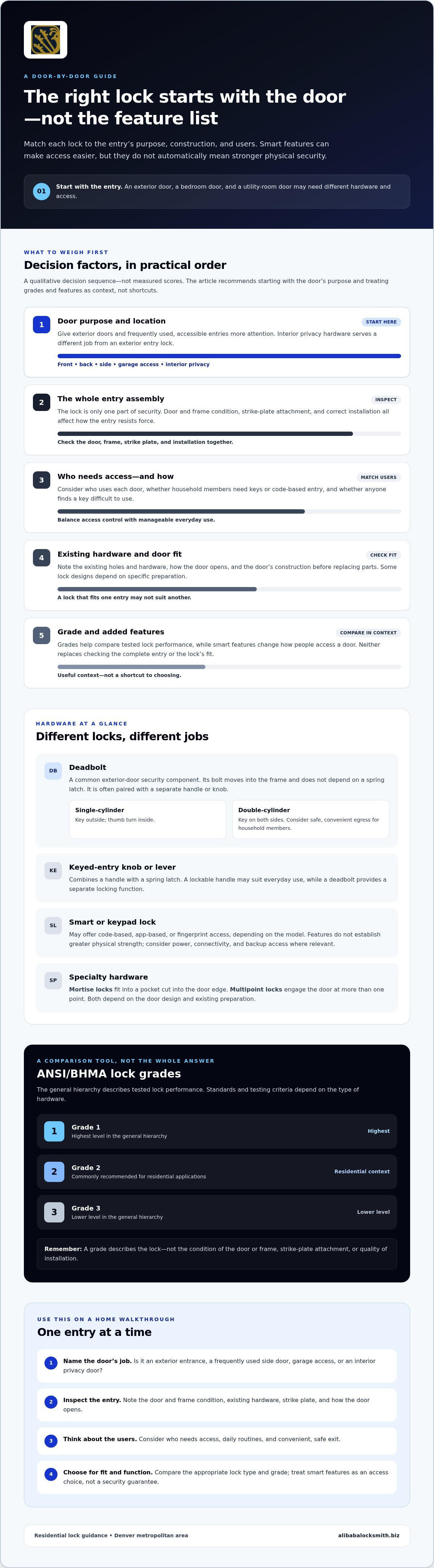
Lock choices can feel confusing, especially when one door needs reliable protection and another mainly needs privacy. Start by matching the lock to the door’s purpose. A lock is one part of an entry’s overall security: the door, frame, strike plate, and installation all affect how well the entry resists force.
Consider three goals: resisting forced entry, controlling who can enter, and making everyday use manageable. The lock’s construction contributes to physical security, while keyed or electronic access affects how people enter. Convenient operation matters too, particularly when household members need to lock up quickly or someone has difficulty using a key. The best lock types for home balance these needs at each door.
Which doors need the most attention?
Start with exterior doors and consider how each is used. A front or back entrance that provides direct access to the home often deserves more attention than an interior closet door. A bedroom privacy lock serves a different purpose: it provides personal space but isn’t designed to offer the same security as an exterior entry lock.
Walk through the home and note the front door, frequently used side entrances, and any accessible door between the home and garage. A bedroom door may need privacy hardware, while a utility-room door may have different access needs. Not every opening needs identical hardware. Consider the door’s construction, exposure, and users before choosing a lock.
How should you think about lock grades?
ANSI/BHMA grades provide a standardized way to compare tested lock performance. In the general hierarchy, Grade 1 is the highest level, Grade 2 is commonly recommended for residential applications, and Grade 3 is a lower level. A grade is useful context, but it isn’t a shortcut to choosing a lock: standards and testing criteria depend on the type of hardware.
A grade describes the lock, not the complete entry. It doesn’t tell you whether the door or frame is sound, whether the strike plate is well secured, or whether the lock was installed correctly. A properly fitted lock, a reinforced strike plate, and long screws anchoring it to the frame can make a meaningful difference to the door assembly. For background on how deadbolt locks work and their variations, see the overview from Wikipedia.
Before comparing options, note the hardware already on the door and how your household uses it. A lock that suits one entry may be awkward or unnecessary on another. Looking at each door separately helps you weigh security, access, and daily convenience without assuming the most complex option is automatically the best.
Which home lock types do what: deadbolts, smart locks, and more?
Lock types are easier to compare when you focus on the role each one plays. A deadbolt is a common security component on exterior doors. Its bolt moves into the door frame rather than relying on the spring latch found in many knobs and levers. A deadbolt is often paired with a handle or knob, so the door has separate hardware for latching and locking.
Deadbolts come in different configurations. A single-cylinder design uses a key on the exterior and a thumb turn inside. A double-cylinder design requires a key on both sides. Because a double-cylinder lock can affect how occupants exit, consider household needs and safe, convenient egress when choosing. Neither configuration is a universal fit for every door.
What is the difference between a deadbolt and a keyed-entry lock?
A keyed-entry knob or lever typically combines a handle with a spring latch operated by the knob or lever. A deadbolt is a separate locking mechanism and doesn’t depend on that spring latch. The distinction matters: a handle that locks may suit an entry’s everyday use, while a deadbolt provides a different locking function.
A handleset combines exterior door hardware, such as a grip or handle, with locking components. Some setups pair a handleset with a separate deadbolt. Choose a combination that suits the door’s existing holes and hardware, how the door opens, and how people in the home use it. Before replacing parts, note what is already installed.
When might a smart lock or specialty lock make sense?
Smart and specialty locks address different access or door-design needs. A keypad can reduce reliance on carrying a key, while some models also offer fingerprint or app-based access. Features vary by model, and added access options don’t establish that a lock has greater physical strength. Weigh convenience alongside the lock’s construction and the door it must fit.
Keypad or connected locks: May suit households that want code-based entry or app-based control. Connected features can depend on power, communication, or the model, so consider your routines and backup access.
Mortise locks: Fit into a pocket cut into the door’s edge and combine locking parts within a single lock body. Their installation depends on the door’s construction and existing preparation.
Multipoint locks: Engage the door at more than one point. They’re often associated with particular door and hardware systems, so they aren’t a simple replacement for every standard lock.
There’s no need to choose the most feature-heavy option by default. The best lock types for home match the entry, hardware, and access habits. If you’re unsure how a lock will fit, residential lock installation in Denver can help match the choice to the door itself.
Are smart locks more secure than traditional home locks?
Not automatically. Smart features and physical security are separate considerations. A keypad or app changes how people unlock a door, but connectivity alone doesn’t show how well a lock resists forced entry. A well-made smart lock can provide strong physical security, while a traditional keyed lock avoids dependence on batteries, Wi-Fi, or software. Compare construction and fit, then choose the access method that suits your household.
The practical difference is often access management. With a key, residents use a physical key, which can be misplaced or copied. A keypad lets people enter a code, and some models allow codes to be changed. Depending on the lock and setup, connected models may add app-based access. Those options can help a household that regularly coordinates entry, but they don’t replace a sound door and proper installation.
What changes when a lock adds a keypad or app?
Keyless access can simplify routines. Residents may prefer entering a code instead of carrying a key, or sharing access with an invited guest without handing over a physical key. Available methods vary by model. A keypad may work independently, while app-based features can depend on the lock’s power and connection setup. Check the manufacturer’s instructions for the specific lock’s access options and requirements.
Keep your household’s needs in view. Consider who needs to enter, whether everyone can use the chosen method comfortably, and what happens if the usual access method isn’t available. Connected functionality differs between locks, so don’t assume a model includes remote features or other capabilities unless its instructions say so.
What should you compare beyond the access method?
Look past the keypad, keyway, or app. Check the lock’s ANSI/BHMA grade, physical construction, and compatibility with the door. The frame, strike plate, and installation also affect the overall security of the entry. A feature-rich lock can still be a poor choice if it doesn’t fit the door or is installed incorrectly.
Before choosing, read the manufacturer’s guidance for power, compatibility, and operation. Match those details to your door and routine. The best lock types for home aren’t defined by smart features alone; they combine suitable physical hardware with access that works for the people using the door.
How do you choose the best lock types for your home?
Choose door by door rather than buying the same lock for every opening. Start with where the door leads and how it’s built, then consider its existing hardware and who needs to use it. This process keeps your decision grounded in household needs rather than features or appearance alone.
Identify the door’s role. Note whether it’s a primary exterior entrance, a secondary entry, or an interior door. A front door used throughout the day may call for a different setup from a low-traffic side entrance. An interior bedroom door may need privacy hardware, not the same locking arrangement as an exterior entry.
Check the door and existing preparation. Look at the door’s material and condition, its thickness, and the lock openings already in place. Replacement hardware needs to fit those openings and work with the way the door swings and closes. Forcing an incompatible lock into existing preparation can lead to poor operation.
Consider who needs access. Think about residents, children, older adults, and invited guests. Some people are comfortable carrying keys; others may find keypad entry simpler. Choose a method household members can operate reliably, accounting for anyone who may have difficulty using a key or entering a code.
Match the lock to the entry. For a primary exterior entrance, consider a deadbolt paired with compatible handle hardware. At a secondary door, the right arrangement depends on its construction and how often it’s used. For an interior door, a privacy lock may be sufficient. These are starting points, not rules for every home.
Weigh convenience against dependencies. Keyed locks don’t rely on batteries or a network. Keypads and connected locks may make access easier for some routines, but their requirements vary by model. Keyless access doesn’t replace suitable physical hardware or a sound installation.
Plan for fit and upkeep. Check the manufacturer’s instructions for compatibility and operation. Consider whether the lock, strike plate, and door frame align and work smoothly together. A Denver home lock maintenance guide can help you plan care after choosing your hardware.
How do fit and installation affect the decision?
A lock can look suitable on paper and still be a poor fit for a particular door. Existing holes, door thickness, and compatible hardware all matter. After installation, the door should close properly and the lock should operate without binding. If you’re planning a deadbolt upgrade, this Denver residential locksmith guide offers related information.
The best lock types for home fit the doors and work for the people who use them. For help matching and installing residential locks, contact Ali Baba Locksmith for Denver home lock service.
When should Denver homeowners call a locksmith about home locks?
You don’t need to wait for a lock to fail completely before getting help. A lock that doesn’t fit properly, damaged hardware, or a planned security upgrade are all reasonable reasons to call a residential locksmith. An on-site assessment can consider the lock alongside the door and existing hardware, helping turn a list of options into a practical plan.
Consider arranging service if you notice:
A key is difficult to turn, or the lock feels stiff or inconsistent.
The latch or bolt doesn’t line up smoothly with the strike plate when the door closes.
The knob, lever, or lock is loose, visibly damaged, or no longer operates as expected.
You’re replacing a door or hardware, or want to upgrade an entry after a change in household access needs.
These symptoms can have different causes. A bolt that catches, for example, may relate to how the door and frame align, not just to the lock. Avoid forcing a key or repeatedly pushing a misaligned door into place, since that can make operation harder. A locksmith can assess the hardware in context and explain suitable repair or installation options.
What can an on-site residential locksmith help with?
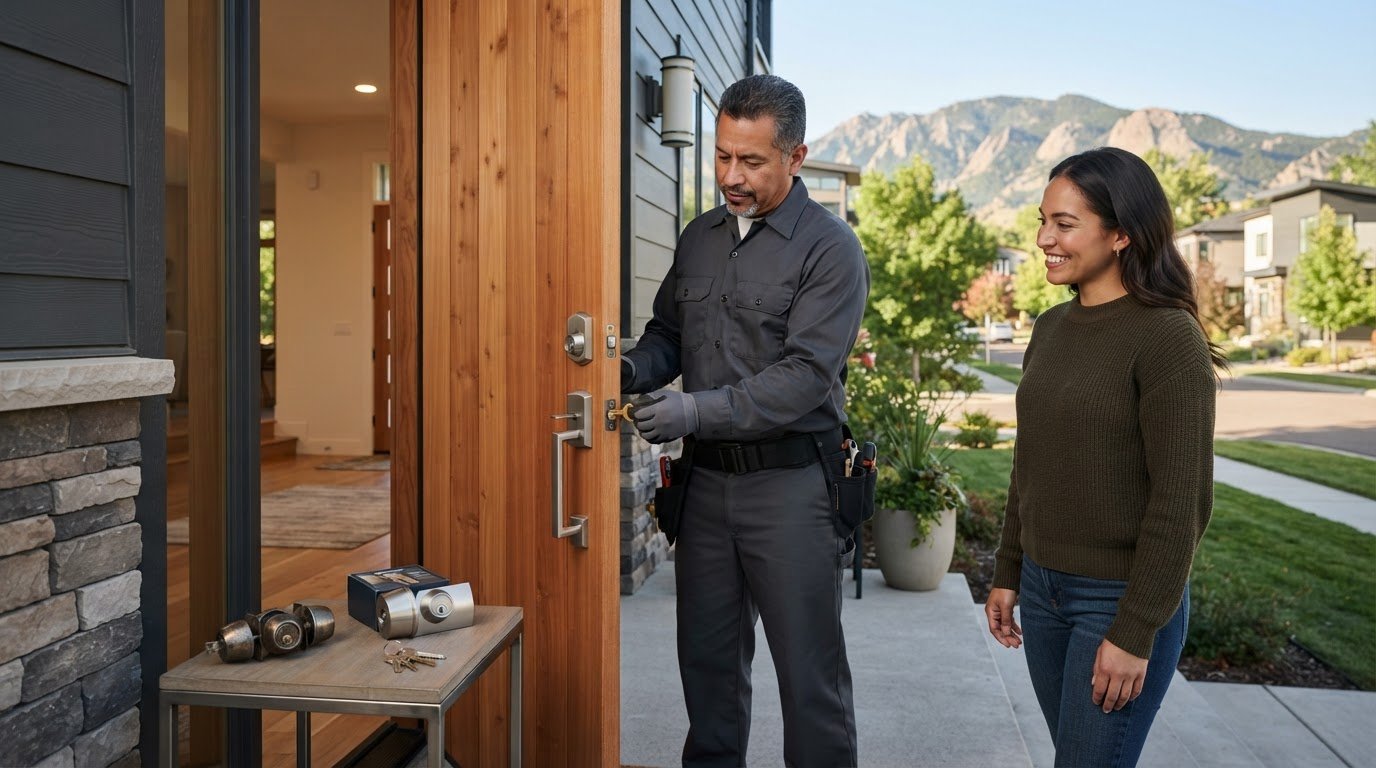
Ali Baba Locksmith provides mobile residential lock installation and repair in the Denver metropolitan area. On-site service brings the lock and door into the same assessment: the existing hardware, how the door closes, and whether the selected lock suits the opening. This is useful when replacement hardware doesn’t seem to match or when you’re planning an upgrade and want to account for the door’s actual setup.
The right next step depends on the condition of the lock and entry. A locksmith can address damaged or poorly operating hardware, or install a lock that fits the door and your household’s access needs. Don’t base the choice on features alone; fit and operation matter too.
What should you prepare before a lock service visit?
A few observations can make the conversation more focused. Before arranging service, note:
Which door needs attention: Identify the front, side, garage-entry, or interior door.
What’s installed now: Describe the lock type and any visible damage or unusual operation.
What you want to change: Explain whether you need a repair, replacement, or security upgrade.
Who needs access: Consider household members’ comfort with keys, codes, or other access methods.
You don’t have to settle every lock detail before arranging service. A clear description of the door and the issue is a practical start. For residential lock service in Denver, contact Ali Baba Locksmith to discuss your installation or repair needs.
Make your next lock decision with confidence
Turn your research into one manageable next step: choose the door you’re most concerned about and note what you want to improve, whether that’s smoother operation, more controlled access, or a hardware upgrade. A clear goal keeps the decision focused on what matters to your household instead of adding features you may not need.
The best lock types for home are a personal fit, shaped by your doors and daily routines. If you’re unsure how your preferred option will work with an existing door, skilled help can bring clarity before you commit to a change. Ali Baba Locksmith provides mobile residential lock service across the Denver metropolitan area.
For help choosing and fitting residential hardware, contact Ali Baba Locksmith for residential lock service in Denver to discuss an installation or repair. A well-matched lock and careful attention to fit can help you move forward with greater confidence in your home’s everyday security.
Frequently Asked Questions
Can a locksmith key multiple home locks alike?
Often, compatible locks can be set up to work with the same key, but the cylinders and keyway must support that arrangement. A locksmith can inspect the existing hardware and advise whether rekeying or changing a cylinder makes sense. Keying locks alike can reduce the number of keys you carry, which may be useful if your home has several entries. It doesn’t make the locks physically stronger.
Will a smart lock work if the Wi-Fi goes out?
It depends on the lock and which features you use. Some models keep local keypad or key access available without an internet connection, while remote app functions may require connectivity. Before choosing a lock, check its instructions for access methods and limitations. Think through a realistic outage: if the internet is unavailable, can each household member still enter using a method they know how to use?
What happens if a smart lock’s batteries run out?
Battery warnings and backup entry methods differ by model, so read the manufacturer’s instructions before installation. Some electronic locks provide a low-battery warning, but don’t assume yours uses the same warning or offers a particular emergency method. Keep the instructions accessible and learn the specified backup procedure in advance. That preparation can help prevent a depleted battery from becoming an unexpected lockout.
Can you install a new lock on any front door?
No. Compatibility can depend on door thickness, material, existing holes, edge preparation, and the hardware already installed. Compare the door with the manufacturer’s specifications before buying, especially if you’re replacing a lock rather than fitting a new door. If the measurements or fit are unclear, a locksmith serving Denver homeowners can assess the door and help identify hardware suited to its setup.
Can renters change the locks on a home?
Renters should review their lease and speak with the property owner or manager before changing or adding a lock. Responsibilities and requirements can vary by lease and location, so don’t assume the same arrangement applies everywhere. If a change is approved, keep track of all keys and clarify how the original hardware or access must be handled. This helps avoid confusion when the tenancy ends.
Is a deadbolt enough to secure a front door?
A deadbolt can be an important part of an entry, but it can’t compensate for every weakness around it. A door that doesn’t close securely or a loose strike plate, for example, may affect how the whole entry performs. Consider the condition of the door and frame along with the lock. The best lock types for home work as part of a sound, properly fitted door assembly.
How often should home door locks be replaced?
There’s no single replacement schedule for every lock. Consider repair or replacement if hardware is damaged, unreliable, no longer fits after a door change, or doesn’t suit your household’s access needs. As a simple check, notice whether keys turn smoothly and each door latches as expected. If operation changes, don’t force the key; consult a home lock maintenance guide or arrange an assessment.

Comments