
High-Security Lock Installation in Denver: A Business Owner’s Buying Guide

What if a stronger lock still leaves your business exposed because the door or key system isn’t suited to it? Choosing high security lock installation Denver businesses can rely on means looking beyond the lock itself. The hardware, door, and control over who holds keys all need to work together.
If you’re unsure whether your current locks adequately manage access, or concerned an upgrade could disrupt daily operations, assess the full picture before deciding. A high-security lock can offer practical advantages over standard hardware, but the right choice depends on your entrances, door construction, and how staff or tenants need to enter.
This guide explains what sets high-security locks apart, how to assess your building’s needs, and what to expect from professional installation. You’ll learn how key control fits into the decision, what an on-site assessment can identify, and how to plan work around your doors and access routines. Ali Baba Locksmith provides mobile commercial locksmith services in the Denver metropolitan area, including on-site lock installation.
Table of Contents
What Makes High-Security Lock Installation Different for Denver Businesses?
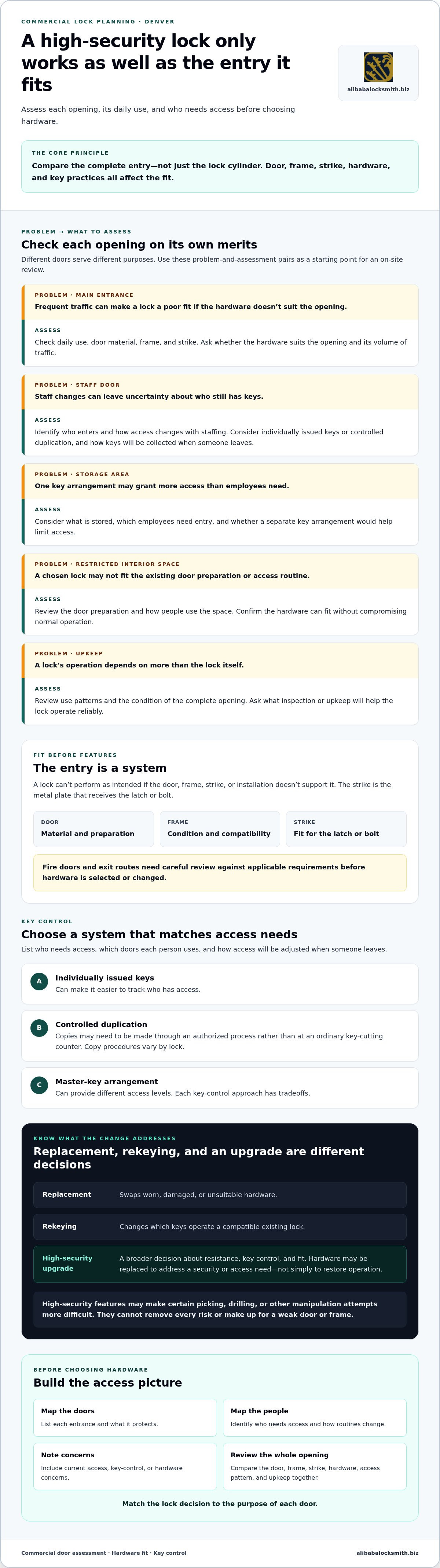
A high-security lock is not simply a heavier version of a standard lock, and it isn’t an unbreakable barrier. Its value comes from features designed to resist certain forms of forced entry or manipulation, manage key duplication, and suit the door and access needs. The right choice depends on the complete entry, not just the lock cylinder.
A high-security lock is hardware designed to offer added resistance and tighter control over key duplication than a standard lock, when it’s properly matched to the door and installed. That distinction matters when comparing high security lock installation options in Denver: useful lock features can’t remove every risk or make up for a weak door or frame.
Which security features distinguish a high-security lock?
Depending on the hardware, added protection may make certain picking, drilling, or other manipulation attempts more difficult. Some systems also use keys with controlled duplication. Copies may need to be made through an authorized process rather than at an ordinary key-cutting counter. The specific protections and copy procedures vary by lock.
Ask what a proposed lock is designed to address, then consider whether that concern applies to the entrance. A lock protecting an office with limited access may need a different balance of convenience and control from one on a door used throughout the workday. Compare the features and intended application of the specific hardware rather than relying on the “high-security” label alone.
When might a Denver business consider an upgrade?
Consider changes in people, property, and access. Staff turnover can leave uncertainty about who has keys. A newly sensitive storage area may call for tighter access control, while valuable inventory can make a frequently used retail entrance a priority. If departments, tenants, or opening procedures have changed, existing hardware and key arrangements may no longer fit the way the business operates.
Different properties have different priorities:
Office: Identify which exterior and interior doors need controlled access, particularly near private work areas or records.
Retail space: Review employee entrances, stock areas, and doors staff use during opening and closing routines.
Shared commercial building: Distinguish access to common entrances, tenant spaces, and restricted rooms so one key arrangement doesn’t grant unnecessary access.
An upgrade differs from routine replacement or rekeying. Replacement swaps worn, damaged, or unsuitable hardware. Rekeying changes which keys operate a compatible existing lock. A high-security upgrade is a broader decision about resistance, key control, and fit. It may involve replacing hardware, but the aim is to address a security or access need, not simply restore operation. Not every door needs the same level of protection. Start by identifying who uses each entrance and what it protects, then match the lock decision to that purpose.
How to Evaluate High-Security Locks for Your Commercial Doors
Start with the opening and how people use it, not with a lock label. A high-rated lock can still be a poor fit if it doesn’t match the door’s construction, existing preparation, or daily access pattern. For high security lock installation in Denver, assess each opening individually and compare hardware, key control, and upkeep together.
Use the table as a starting point for an on-site review. The actual door and hardware still need to be examined.
Match the lock to the door and entry point
A main entrance, staff door, stockroom, and restricted interior space may serve different purposes, so they shouldn’t automatically receive identical hardware. An on-site assessment considers door material and preparation alongside the frame and strike, the metal plate that receives the latch or bolt. Fire doors and exit routes also need careful review against applicable requirements before hardware is selected or changed.
Compatibility matters as much as lock grade. A lock can’t perform as intended if the door, frame, strike, or installation doesn’t support it.
Plan key control and daily access
List who needs access, which doors each person uses, and how keys will be collected or access adjusted when someone leaves. Individually issued keys can make it easier to track who has access. Controlled duplication can limit where copies are made. A master-key arrangement can provide different access levels. Each approach has tradeoffs. If you’re weighing replacement against rekeying, the Denver business lock change guide explains factors to consider.
ANSI/BHMA grading can help compare durability and performance within the applicable hardware category. Grade 1 is the highest grade for durability and security in the cited standards. A grade alone doesn’t establish that a lock suits your door or needs. Check the specific product’s rating and intended application rather than assuming all high-security locks share the same features.
Estimate the project around the actual openings
Project scope depends on the hardware selected, the condition and preparation of each door, and how many openings are involved. A door that needs adjustment may require different work from one ready for a compatible lock. For a general overview of cost factors, see the Denver locksmith pricing guide. To discuss an on-site commercial lock upgrade, connect with Ali Baba Locksmith.
Does a High-Security Lock Alone Make a Business Secure?
No. Stronger lock hardware can make certain forms of forced entry or manipulation more difficult and can improve control over key duplication, depending on the hardware’s specifications. But a lock can’t eliminate every security risk. Unmanaged keys, a damaged door, or gaps in everyday access practices can weaken the value of an upgrade.
Business security depends on the complete door opening and access plan, not on the lock alone. That’s why high security lock installation in Denver should be assessed as part of the entry point and the way people use it.
What a high-security lock can and cannot do
A lock’s benefits depend on its specific design and documented features. Review the product specifications to understand what kinds of resistance it offers and how key duplication is controlled. Don’t assume the “high-security” label means every product provides the same protections or guarantees that a door won’t be breached or accessed improperly.
Locks address physical entry and key access. Alarms, cameras, and monitoring are separate security measures, not functions a mechanical lock provides. Consider them as distinct parts of a broader security plan, without expecting one layer to replace another.
Why the whole door opening matters
The lock works with the door, frame, strike, fasteners, and installation. If the frame is weak, the strike is loose, or the door is damaged or misaligned, those conditions may affect how the entry performs, even if the lock itself is sound. An on-site assessment can identify visible issues and whether the opening needs attention as part of the project.
Evaluate doors individually. A busy customer entrance, a staff-only door, and an interior room may have different patterns of use and exposure. Match the review to each opening rather than assuming every door needs the same upgrade.
Access habits matter, too. A well-chosen lock can’t manage keys that are shared without oversight or never collected when access needs change. Build simple procedures around the hardware:
Track key holders: Keep a current record of who has keys and which areas they can access.
Manage staff changes: Include key return or access updates in employee departure procedures.
Check the entry: Notice sticking, misalignment, loose hardware, or visible damage and have concerns assessed.
Review access periodically: Revisit who needs entry when roles, tenants, or business routines change.
These steps help distinguish improving a lock from managing the full entry. A careful installation can strengthen an appropriate opening, while consistent key practices help preserve control afterward. Neither removes all risk, but together they support a more considered approach to access.
What to Expect During High-Security Lock Installation in Denver
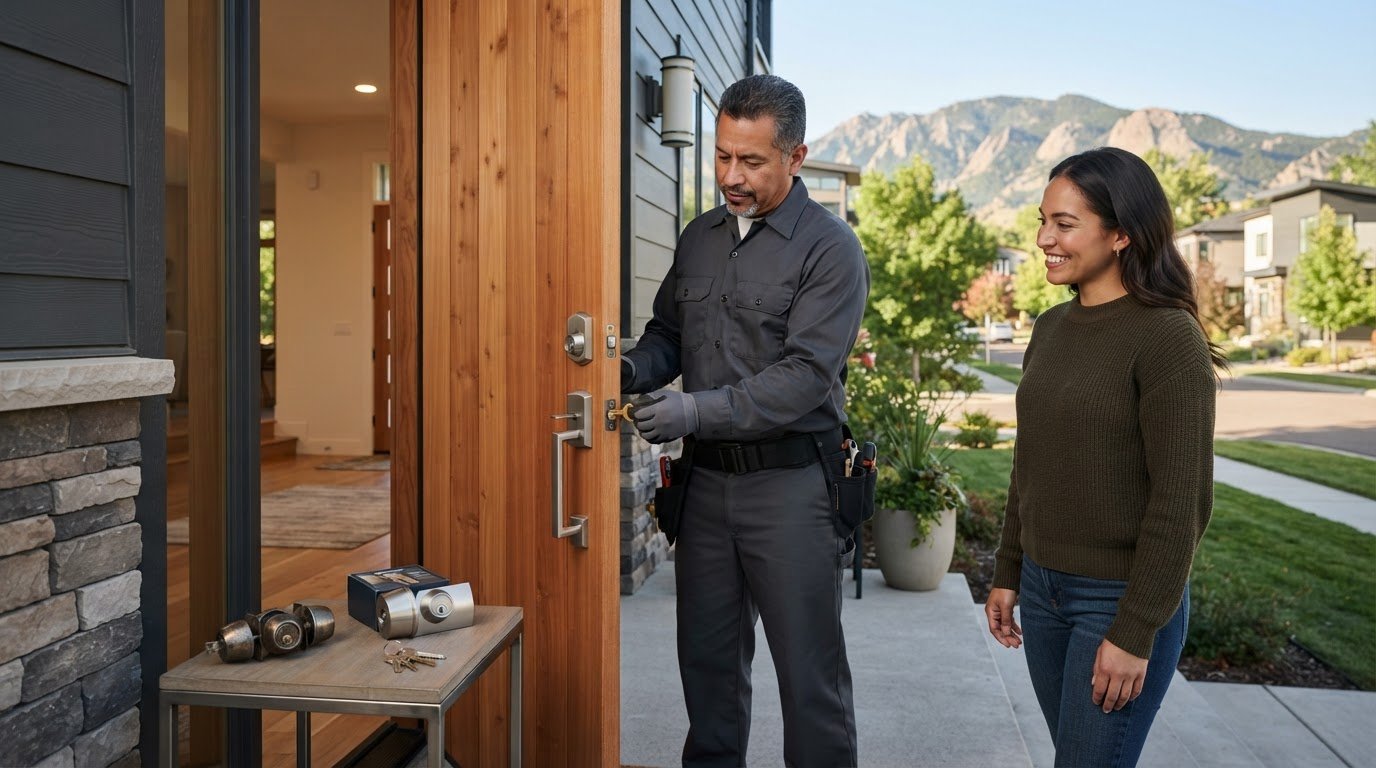
A well-planned installation starts with the actual doors at your property, not a hardware choice made in isolation. For high security lock installation in Denver, businesses can plan around an on-site mobile assessment, the needs of each opening, and the flow of a working day. The process should make clear what’s being fitted and how access will be managed afterward.
For an occupied office, retail location, or shared commercial building, coordination matters. Identify which doors are in scope, who can authorize access, and whether work near a particular entrance should be planned around business hours or restricted areas. Clear preparation helps staff and tenants understand which entry points may be affected. The right plan depends on the property and its operations.
Assessment and preparation at the property
The first stage is to review each opening: its existing lock and hardware, the door’s condition, and how employees, tenants, or customers use it. A mobile assessment lets the locksmith see the door and surrounding hardware in place, helping guide a suitable selection and identify concerns such as damage or difficult operation before fitting begins.
Share practical constraints during planning. A retail team may need a clear route for opening and closing, while an office may have rooms that should remain restricted during work. Fire doors and exit routes require particular care. Applicable building and egress requirements need to be considered for the specific site; an assessment is not a guarantee of code approval.
Fitting, testing, and handing over access
After the hardware is selected, installation focuses on fitting it to the opening and checking that it operates as intended. The locksmith can review how the door closes and how the lock engages, then address issues identified during the work. Checks should be completed at the door itself, not assumed from the hardware selection alone.
Before the project is considered complete, review the access arrangement with the authorized contact. Clarify which keys operate which doors, who should receive them, and how copies or future access changes will be managed. For a shared building, make sure the handover reflects the agreed separation between common areas and tenant spaces. Staff should know whom to contact internally if a key is lost or a door’s operation changes.
To prepare, make a simple list of the doors involved, the people who need access, and any operating constraints. That gives the on-site review a practical starting point and keeps decisions tied to your business’s routines.
Plan an on-site commercial lock assessment in Denver with Ali Baba Locksmith to discuss your property’s doors and access needs.
Plan Your Denver High-Security Lock Upgrade With Ali Baba Locksmith
A successful commercial lock upgrade starts with a clear picture of how your property operates. Ali Baba Locksmith provides mobile commercial locksmith services in the Denver metropolitan area, including on-site lock installation. Sharing your door list, access needs, and day-to-day constraints helps focus the assessment on hardware that suits each opening and the people who use it.
The goal isn’t to choose the same lock for every door. It’s to connect three decisions: which hardware fits the opening, who needs access, and how keys or access arrangements will be managed over time. A considered plan for high security lock installation in Denver begins with those details.
Prepare the details that make an assessment useful
Before the visit, gather a practical overview of the property. Include doors that need attention, areas where access should be limited, and the concerns that prompted the upgrade. You don’t need to know the technical specifications of existing hardware. Clear observations about how the doors behave and who uses them are a useful starting point.
Property and entry points: Note whether the site is an office, retail space, or shared building, then list the main entrance, staff doors, storage rooms, and restricted interior areas in scope.
People and keys: Identify current keyholders, roles that require access, and recent staff or tenant changes that may affect who should have keys.
Recurring concerns: Record issues such as a lock that sticks, a door that doesn’t close smoothly, uncertainty about key copies, or access that no longer matches how the space is used.
Operating constraints: Flag busy periods, entrances that need to remain available, and areas that should stay restricted during work.
These notes help the on-site assessment focus on priorities instead of assumptions. They can also help distinguish an access-control concern from a door that mainly needs a hardware or operation review.
Take the next step toward stronger access control
During the assessment, Ali Baba Locksmith can review the existing doors and hardware alongside your access concerns. The mobile service brings the discussion to your Denver property, whether you’re planning a focused change at one entrance or reviewing several commercial openings. Commercial locksmith services include on-site lock installation.
Bring your notes and identify the person authorized to discuss the project. The lock selection and installation plan can then be shaped around the openings, key management, and business routines you’ve described. A clear starting brief helps keep decisions practical and relevant.
Ready to discuss a commercial upgrade? Contact Ali Baba Locksmith about high-security lock installation and share the doors and access concerns you’d like addressed.
Make Your Next Access Decision With Confidence
Turn your security concerns into a simple access plan. Choose the door where better control would make the biggest difference, note who needs to use it, and consider how access should change if staffing or business routines shift. That gives your upgrade a clear purpose instead of treating every entrance the same.
With high security lock installation in Denver, businesses can make a thoughtful improvement by matching the lock to the opening and planning key management alongside it. You don’t need to map out every technical detail first. A focused conversation about your doors and access priorities can help shape the project.
Start planning your Denver commercial lock upgrade with Ali Baba Locksmith. Take the next step toward access that better fits the way your business operates.
Frequently Asked Questions
Can a high-security lock prevent every break-in?
No. A high-security lock may make specified attack methods harder, but it can’t guarantee that a business will never be entered unlawfully. An unlocked side entrance or a key kept by someone whose access should have ended can undermine the value of upgraded hardware. Treat the lock as one part of your security decisions, alongside door condition, key handling, and staff routines.
Are high-security locks worth it for a small Denver business?
They may be worthwhile if a specific door protects sensitive records, valuable stock, or equipment, or if you need better oversight of key copies. A small business considering high security lock installation in Denver should start by identifying its most important entry points and who needs access to them. That keeps the decision focused on actual business needs rather than upgrading every lock automatically.
Can high-security locks be installed on existing commercial doors?
Often, but suitability depends on the door and its current hardware. A door altered for an earlier lock, for example, may need attention before a different lock can fit and operate properly. An on-site review can show whether the existing opening is a practical match. Fire doors and exit routes also call for consideration of applicable site requirements before changes are made.
What is the difference between a high-security lock and a standard commercial lock?
High-security hardware is generally designed to offer added resistance to certain attacks, tighter key control, or both. The actual features vary, so compare documented specifications rather than relying on the label. A standard commercial lock may be appropriate for a low-risk interior door, while a door protecting confidential files may justify considering stronger key controls. The right distinction depends on the opening’s purpose.
Can high-security locks use a master key system?
Some commercial lock setups can accommodate master-key access, depending on the hardware and planned key structure. Before choosing one, map which roles need access to which doors. For instance, a building manager may need access to shared areas while a tenant’s staff needs entry only to their own space. A clear hierarchy helps avoid issuing broader access than a person’s work requires.
How long does commercial high-security lock installation take?
There isn’t one reliable duration for every property. Replacing hardware on a prepared opening can involve different work from addressing a door that sticks, has been modified, or needs attention across several entrances. To plan around business activity, identify the doors involved and any periods when access must remain clear. An on-site assessment gives a more relevant view of the project scope.
Do high-security locks need special keys?
Some systems use keys with controlled duplication, while others may have different key-management features. The practical issue is how your business will authorize copies and keep track of keyholders. Recording who receives a key and collecting it when their role changes can help keep access records current. Review the selected system’s documented duplication process before setting your workplace procedure.

Comments