
How Locksmiths Open Car Doors: A Clear, Damage-Conscious Explanation

What if the safest way into a locked car isn’t a trick, but a careful assessment? If you’ve searched “how locksmiths open car doors explained,” you may be worried about damage, a trapped key or fob, or how newer vehicle security affects the process. Those concerns make sense. A professional locksmith considers the vehicle and the circumstances of the lockout before choosing an appropriate approach, rather than using one method for every car.
This guide explains what a locksmith assesses, why vehicle design and security features affect the approach, and what details to share when arranging help. You’ll also learn what to avoid while you’re stranded so a stressful moment doesn’t create a bigger problem.
For drivers in Denver, Ali Baba Locksmith provides mobile automotive lockout assistance across the metropolitan area. Knowing what to expect can help you explain the situation clearly and feel more prepared while waiting for help.
Table of Contents
How Locksmiths Open Car Doors: The Safe, Professional Overview
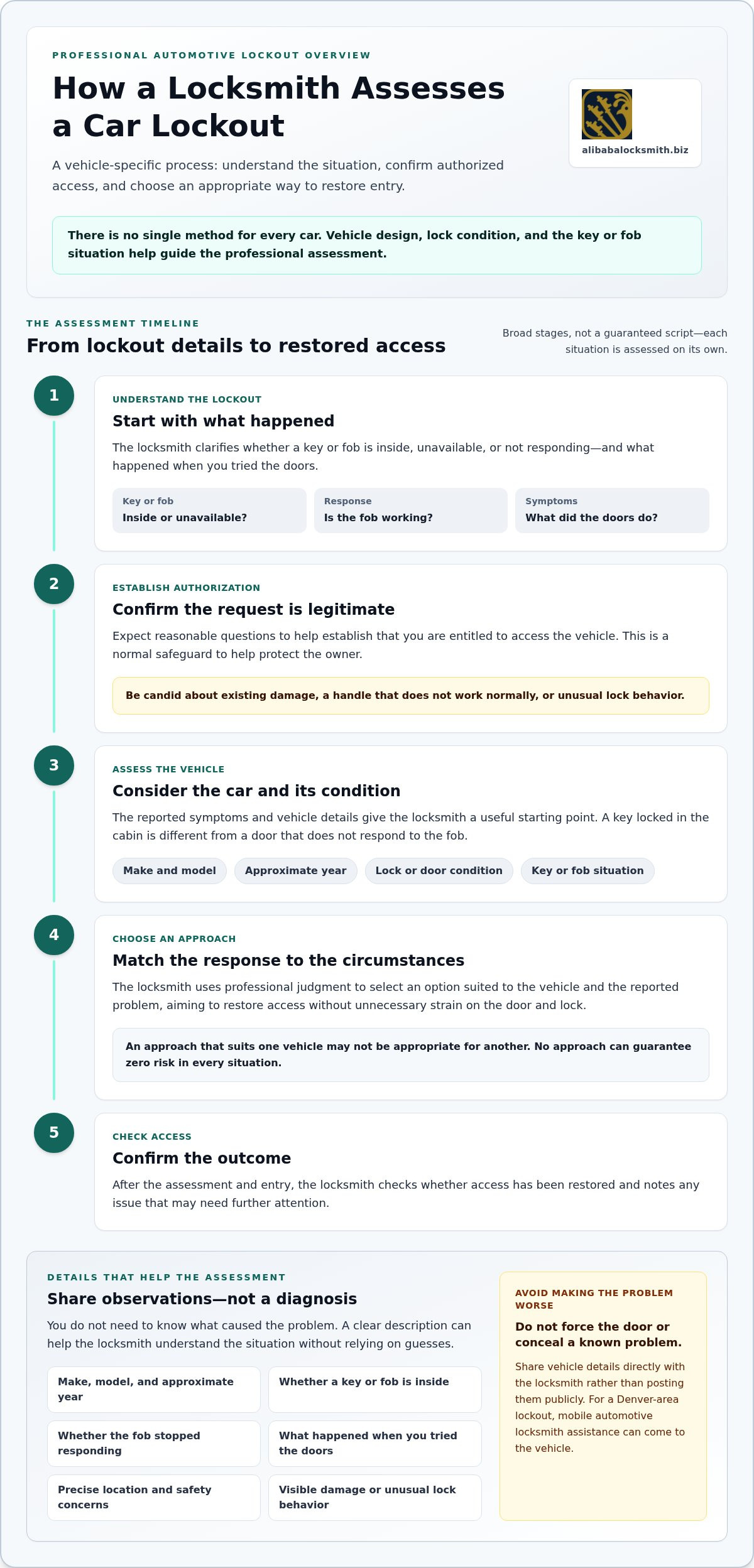
Professional vehicle entry is an authorized, vehicle-specific service. A locksmith assesses the lockout, then chooses an appropriate way to restore access while avoiding unnecessary strain on the door and lock. That’s how locksmiths open car doors explained in plain language: there is no single method for every vehicle. An approach suited to one car may not be appropriate for another, depending on its design, lock condition, and key situation.
Automotive locksmithing is one specialization within the traditional trade of locksmithing, which covers work involving locks and security. For a car lockout, the focus is specific: understand what happened, confirm the request is authorized, and decide how to proceed. The goal is to restore access without avoidable damage, although no approach can guarantee zero risk in every situation.
What happens when keys are locked inside a car?
Sometimes the key is visible inside the cabin and the doors are locked. In other cases, a key or fob is present but not working as expected, or a door lock or central locking system may be involved. These situations can look similar from outside but have different causes and may call for different solutions. Vehicles also vary, so don’t assume every car prevents its keys from being locked inside.
Describe what you observed instead of trying to diagnose the fault. Say whether you can see the key, whether the fob stopped responding, and what happened when you tried the doors. These details help the locksmith understand the situation without relying on guesses.
Why professional assessment comes before entry
Before choosing an approach, a locksmith considers the vehicle’s design and approximate age, the condition of the lock, and the circumstances of the lockout. A key trapped in the cabin is different from a door that won’t respond to the fob. Sharing the make, model, and symptoms gives the assessment a useful starting point.
Authorization is a normal safeguard, not an accusation. The locksmith may ask for information to establish that you’re entitled to access the vehicle. This protects the owner and keeps the work focused on a legitimate lockout.
After assessing the situation, the locksmith selects an approach suited to the vehicle and checks whether access has been restored. Professional judgment can reduce avoidable strain and risk, but it cannot guarantee that damage is impossible. If you’re stranded in the Denver area, mobile automotive locksmith assistance brings help to your vehicle without requiring you to attempt an improvised entry.
How a Car Locksmith Assesses the Vehicle Before Opening It
Vehicle-specific assessment guides professional entry. A locksmith first needs to understand what’s happening, then determine what access is authorized and appropriate for that vehicle. This decision-making is central to how locksmiths open car doors explained: it is not a universal recipe or a set of lock-bypass instructions. The reported symptoms and vehicle condition inform the decision about how to proceed.
Understand the lockout: Clarify whether a key or fob is inside, unavailable, or not responding.
Establish authorization: Ask reasonable questions to help confirm the caller is entitled to access the vehicle.
Assess the vehicle: Consider its make, model, approximate year, and any reported lock or door problems.
Choose an approach: Use professional judgment to select an option suited to the circumstances.
Check access: Confirm whether entry has been restored and note any issue that may need further attention.
These are broad stages, not a guaranteed script. A dead fob, a damaged handle, and a key locked in the cabin describe different circumstances. Accurate details help the locksmith prepare and reduce guesswork. You don’t need to know what caused the problem; report what you observed. For background on professional development in the trade, the Associated Locksmiths of America offers locksmith education and training resources.
What information should you share with the locksmith?
Give the vehicle’s make, model, and approximate year, along with a clear description of what happened. Say whether a key or fob is inside or unavailable, whether the fob has stopped responding, and what you’ve tried. Share your precise Denver-area location and mention immediate safety concerns, visible damage, or unusual lock behavior. Provide these details directly to the locksmith rather than posting them publicly.
Why authorization and vehicle condition matter
Expect reasonable questions to establish that you’re authorized to access the vehicle. This safeguard helps protect the owner and keeps the service focused on legitimate assistance. Be candid about existing damage, a handle that doesn’t work normally, or a fob that appears to be dead. These details can affect the assessment, so don’t force a door or conceal a known problem.
In the Denver area, mobile automotive locksmith assistance brings lockout help to your vehicle. A clear location and symptom description make it easier to understand the situation from the start.
Why Car Door Unlocking Methods Differ From Vehicle to Vehicle
A lockout can look straightforward from outside even when the cause is more complicated. Make, model, door design, key type, and reported symptoms all shape a locksmith’s assessment. That’s why how locksmiths open car doors explained is not a universal set of steps: a professional adapts the plan to the vehicle and the problem rather than assuming one approach suits every car.
How do modern locks and key fobs affect car entry?
In a vehicle with central locking, one electronic system can control multiple door locks. An immobilizer is a separate security feature that helps prevent the engine from starting without a recognized key. These systems can make a lockout more complex, but gaining door access and starting the vehicle are different issues. A locksmith may restore access without resolving a fob, key-recognition, or immobilizer fault.
A flat fob battery can affect how the fob responds, while a system fault may need further diagnosis. If the door opens but the vehicle still doesn’t recognize the key, the remaining problem isn’t necessarily a door lockout. Describing what the car does helps clarify what may need attention next.
What can make a lockout more complex?
Existing damage, a handle that behaves unusually, vehicle security features, or a key trapped in an inaccessible area can all change the assessment. The locksmith may adapt the plan after inspecting the vehicle. No entry approach is universal or guaranteed, and forcing the door can create additional risk. If you're locked out, AAA also advises against actions that could damage the vehicle. In some cases, further diagnosis may be the safer course before proceeding with access.
Locked Out in Denver? Stay Safe While You Arrange Help
A lockout is stressful, but your first decision should be about safety, not the car. If a child, vulnerable person, or animal is in immediate danger, call emergency services now. Don’t leave them unattended in a vehicle that may be unsafe, and follow emergency responders’ instructions.
If there’s no immediate danger, move to a safe nearby place while arranging help, when circumstances allow. Choose a well-lit public location or a staffed business if one is close and safe to reach. Avoid prying the door, using a coat hanger, or breaking glass. These attempts can cause cuts or vehicle damage and may turn a lockout into a larger repair.
What should you do before the locksmith arrives?
Make it easier for mobile help to locate you. Give your precise Denver-area location, including the parking lot, level, entrance, or nearby landmark. Have information ready to show that you’re authorized to access the vehicle. Clearly describe any immediate safety concern.
Share what you know without guessing at the cause. For example, explain whether a key or fob is inside, whether the fob stopped responding, and whether a door or handle is behaving unusually. That context helps the locksmith prepare for the situation.
What to expect from a mobile locksmith in Denver
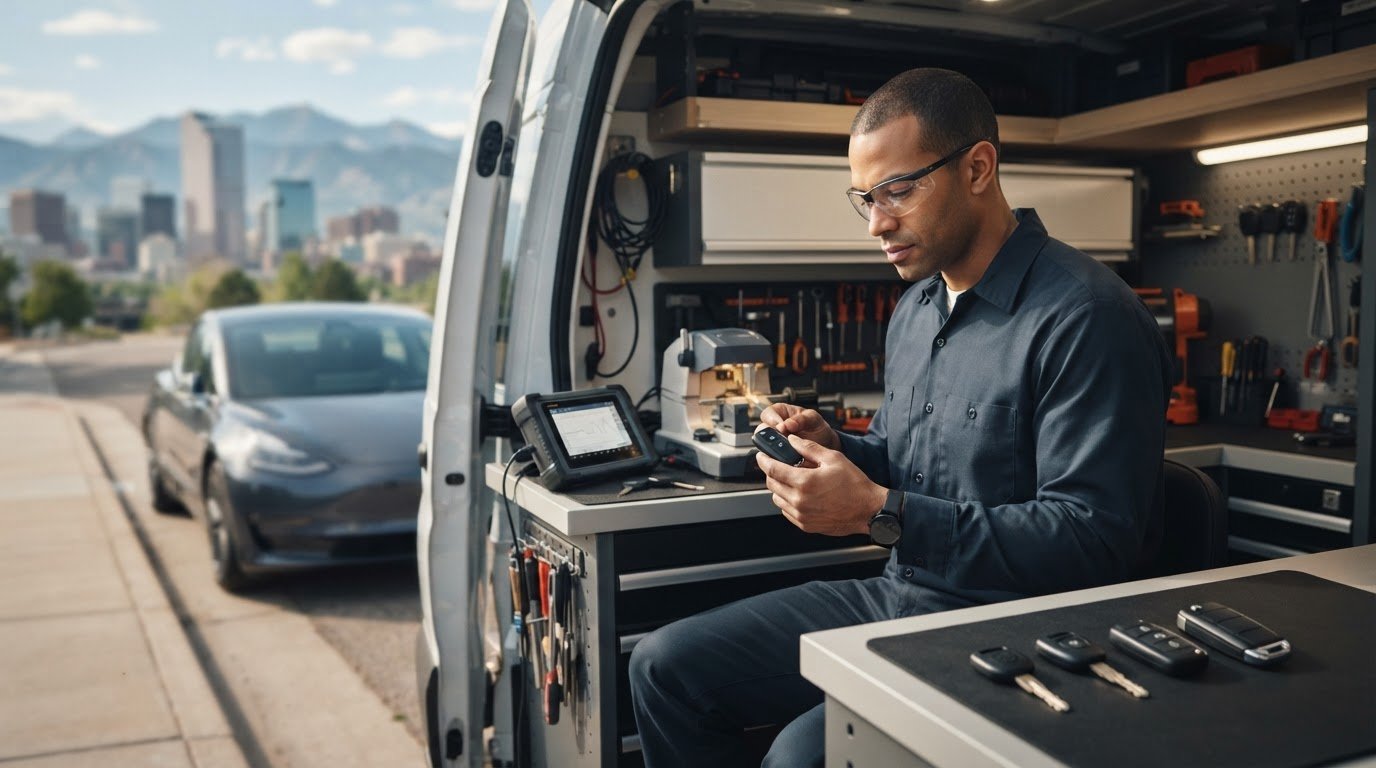
A mobile locksmith comes to the vehicle, assesses the specific car and lockout, then chooses an approach based on the circumstances. The process is not a universal set of steps. Clear symptoms, visible damage, and safety concerns help guide the assessment. This is the practical side of how locksmiths open car doors explained: professional judgment comes before entry, and avoiding unnecessary strain matters.
Ali Baba Locksmith provides mobile automotive lockout assistance in the Denver metropolitan area. Details about mobile car lockout assistance are available online.
After the Car Door Opens: Next Steps and Professional Help
Getting back inside is a relief, but take a moment before driving away. Check that the door closes securely, the handle works normally, and the locks respond as expected. Look for visible damage or anything unusual in the door’s operation. Restoring access may solve the immediate problem, but checking how the vehicle behaves afterward can reveal whether another issue remains.
What should you check once you are back inside?
Confirm that your key or fob works as expected and that the central locking behaves normally. If the original symptom persists, such as a door that won’t latch or a fob that still doesn’t respond, describe exactly what you notice to an automotive locksmith. Don’t force a handle or lock that feels stuck. A clear description helps a professional assess whether the problem goes beyond the initial lockout.
When is a lockout also a key or lock problem?
If the key was simply locked inside and works normally once retrieved, replacement or repair may not be necessary. A lost or damaged key, a nonresponsive fob, or a lock that continues to malfunction is a different issue and may need diagnosis or key service. For more on that distinction, see the car key replacement guide. Not every lockout calls for a new key or further work.
For future peace of mind, consider where you keep a spare key and check that your fob responds as expected before setting out. If a key or lock issue remains, describe the symptoms rather than forcing the mechanism. That keeps the next step focused on the actual problem.
Ali Baba Locksmith provides mobile automotive lockout assistance in the Denver metropolitan area, along with professional key replacement. Share the symptoms and the vehicle’s location so the locksmith can assess the situation at your car.
Handle a Car Lockout With Confidence
The key takeaway from how locksmiths open car doors explained is simple: professional entry starts with assessing the specific vehicle and confirming authorized access. The appropriate approach can vary with the car’s design, lock condition, and whether the issue involves a key, fob, or locking system. Clear details help a locksmith understand the situation, while improvised attempts such as prying or breaking glass can create additional risks.
Once the door opens, check that it closes and locks normally, and note any key or fob problem that remains. A lockout doesn’t always mean you need a replacement, but persistent symptoms deserve attention from an automotive locksmith.
Ali Baba Locksmith provides mobile automotive locksmith service across the Denver metropolitan area. If you’re locked out, contact Ali Baba Locksmith for professional car lockout help in Denver.
Frequently Asked Questions
How do locksmiths open car doors without damaging them?
Locksmiths assess the vehicle and lockout first, then choose an approach suited to the car and its condition. That vehicle-specific judgment is central to how locksmiths open car doors explained: the aim is authorized access while avoiding unnecessary strain on the door and lock. No method can guarantee zero damage in every situation, especially if a component is already faulty, so share any known issues before work begins.
Can a locksmith open a car with the keys locked inside?
Yes, an automotive locksmith can help with a key locked inside, after assessing the vehicle and establishing that you’re authorized to access it. Tell the locksmith where the key is, if you know, whether the doors are locked, and whether anything else seems unusual. The exact approach depends on the vehicle, so a key trapped inside doesn’t mean every car can be opened in the same way.
How long does it take a locksmith to unlock a car door?
There isn’t one reliable time estimate for every car lockout. The vehicle’s design, lock condition, key or fob situation, and unusual symptoms can affect how the locksmith assesses and completes the work. Share those details when arranging help so the situation is clear from the start. A professional can explain expectations based on the vehicle and circumstances, but there is no universal time promise.
What happens if my car key fob is inside but the car will not unlock?
A fob inside the car doesn’t always mean the issue is simply a locked door. The fob may not be responding, its battery may be flat, or the vehicle’s locking system may have a fault. Describe what happens when you try to unlock the car and whether the fob works elsewhere. Restoring door access and resolving a key-recognition or system problem are different tasks, and the cause may need further diagnosis.
Is it safe to unlock a car door with a coat hanger?
No. A coat hanger or other improvised tool can injure you or damage the vehicle, and it may not work with your car’s design. Avoid prying or breaking glass as well. If you’re locked out, move to a safe place if possible and arrange professional help. If a person or animal faces immediate danger inside, call emergency services rather than attempting a DIY entry.
What should I tell a locksmith when I am locked out of my car in Denver?
Share the vehicle’s make, model, and approximate year, along with your precise Denver-area location. A nearby landmark, parking structure, level, or entrance can help a mobile locksmith find you. Explain whether a key or fob is inside or unavailable, what you’ve tried, and any unusual lock behavior or visible damage. Mention immediate safety concerns, and have information ready to establish that you’re authorized to access the vehicle.
Can a locksmith help if my car door lock or key fob is malfunctioning?
Yes. An automotive locksmith can assess a lockout involving a malfunctioning door lock or a nonresponsive key fob, and provide vehicle key replacement when needed. Accessing the car may not resolve the underlying fault, so describe the symptoms clearly, such as a handle that won’t operate normally or a fob that no longer responds. Not every lockout requires replacement or repair; the next step depends on the cause.
Comments