
How Long Does It Take to Rekey a House? A Clear Homeowner’s Guide

How long does it take to rekey a house, and will you need to block off your whole day? For a typical home with three to five exterior door locks, the work may take about 30 to 60 minutes. That’s a planning estimate, not a guarantee. The number and condition of the locks, their type, and whether you want them keyed alike all affect the timeline. House size alone isn’t the deciding factor.
Rekeying changes the pins inside an existing lock cylinder so the old key no longer works. If your hardware is in good condition, you may not need to replace the entire lock. Knowing what to expect can help you plan and feel more confident about securing your home.
This guide explains what happens during a residential rekey, what can add time, and what details to have ready when arranging service. Ali Baba Locksmith provides mobile residential rekeying in the Denver metropolitan area, so the work can be handled at your property. You’ll get a more realistic sense of the timeline and how to prepare for the appointment.
Table of Contents
How Long Does It Take to Rekey a House? Start With a Realistic Estimate
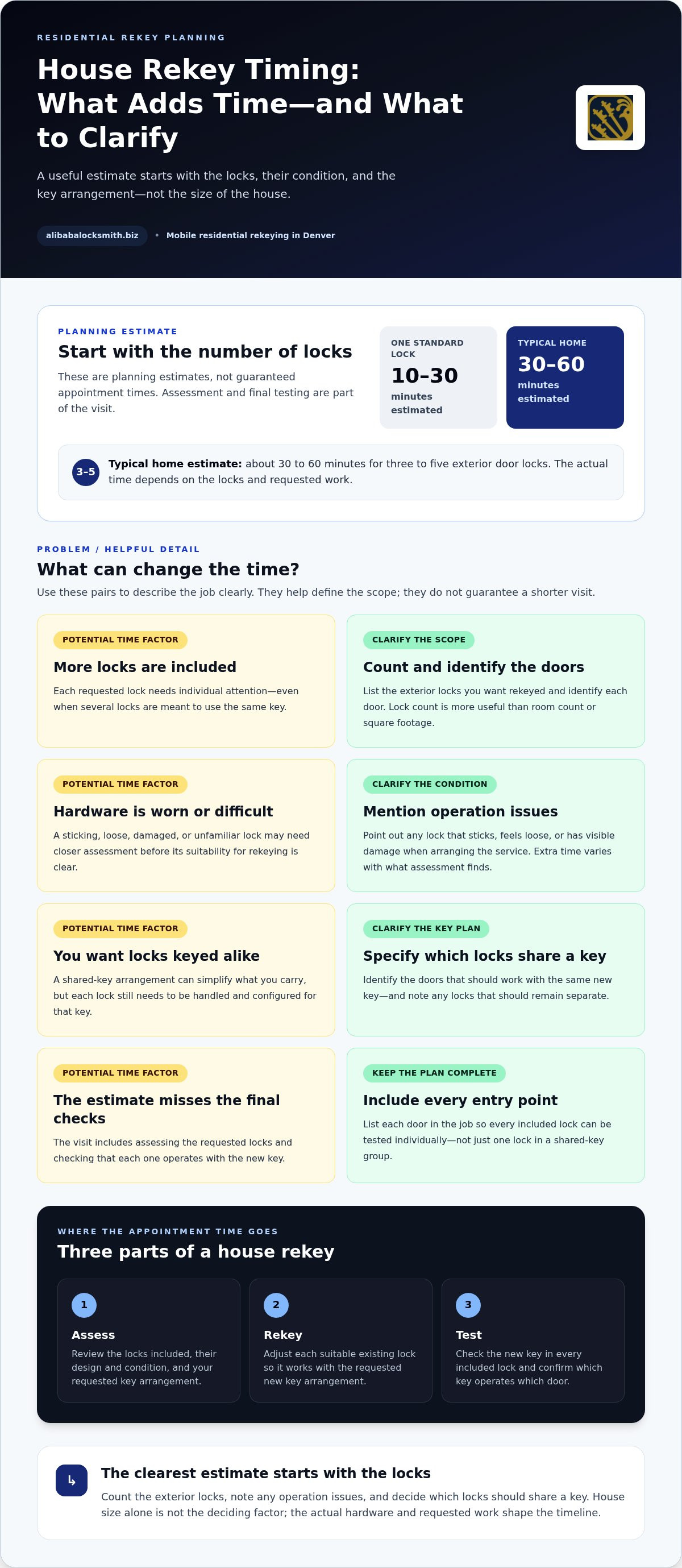
Rekeying a standard lock is often estimated at 10 to 30 minutes. A typical home with three to five exterior door locks may take about 30 to 60 minutes. Treat these as planning estimates, not fixed appointment times. The full visit can take longer when the locksmith needs to assess the locks and test them after the work.
So, how long does it take to rekey a house? The best estimate depends less on the home’s overall size than on the locks involved. The number of locks, their condition, and whether you want them to work with the same key all shape the scope. A larger home with a few entry locks may take less time than a smaller home with more locks or hardware that needs extra attention.
What counts as a typical house rekey?
Rekeying changes a lock’s internal configuration so it works with a different key. In a common pin tumbler lock, the pins inside the cylinder are adjusted to match the new key. If the existing hardware is suitable, it usually stays in place. Rekeying doesn’t automatically mean replacing the entire lock.
The 30-to-60-minute estimate for a typical multi-lock home is a useful starting point, not a promise. It describes the expected work for a straightforward job. The full appointment also includes checking the relevant locks and confirming they operate correctly with the new key.
Does every lock take the same amount of time?
No. Lock designs differ, and a worn, sticking, damaged, or unfamiliar lock may need closer assessment. Each additional lock also adds work, even if you want several locks to use one key. Keying multiple locks alike can simplify what you carry, but each lock still needs individual attention.
The estimate should account for both the requested key arrangement and the hardware’s condition. If a lock isn’t operating smoothly, mention that when arranging service. It helps clarify the likely scope of the visit.
Room count isn’t a reliable way to predict the duration. For planning, count the exterior locks you want rekeyed and note any that are difficult to operate. That gives a clearer picture than the home’s square footage or number of rooms, while leaving time for assessment and final testing.
What Happens During a House Rekey and Where the Time Goes
A rekey appointment has three practical stages: assessing the requested locks, rekeying hardware that’s suitable for the work, and testing each lock with the new key. The locksmith needs to identify which entry points are included and understand your preferred key arrangement, then check that the work operates as intended.
How does a locksmith rekey a door lock?
First, the locksmith reviews the locks you’ve asked to have rekeyed and considers their design and condition. Rekeying adjusts the mechanism so the lock accepts a different key. Suitable existing hardware can remain in place. The exact work varies by lock, so there isn’t one universal sequence for every door.
Next, the locksmith handles each suitable lock according to its design and the requested key arrangement. If you want several entry locks to work with one new key, each lock still needs to be addressed. Identify which locks should share a key. A key that operates one lock won’t necessarily operate the others unless they’ve been configured for it.
Professional locksmith work calls for care and sound judgment. The ALOA Security Professionals Association is an industry resource for locksmith professionals and consumers. For homeowners, the practical takeaway is that the lock’s design and condition influence the work, so an assessment helps establish what the appointment involves.
Why does testing each lock matter?
After rekeying, the new key should be tested in every lock included in the job. A successful test in one door doesn’t establish that the key will work in another. Each lock needs its own check to confirm the requested arrangement and identify any operation issue before the work is considered complete.
The entry points matter, too. If the appointment includes a front door, back door, and side entry, each should be checked. The locksmith can also confirm which key operates which lock, especially if some locks are intended to share a key and others aren’t.
Assessment and testing are part of answering how long does it take to rekey a house accurately. A clear list of the doors and your preferred key arrangement helps define the scope before work begins. If you’re planning to rekey your home in Denver, Ali Baba Locksmith provides residential rekeying service on-site, with the work shaped by the locks included and their condition.
What Can Make Rekeying a House Take Longer?
A straightforward rekey can take longer if the job includes more locks, hardware that needs extra assessment, or a specific keying arrangement. These factors don’t add a fixed amount of time in every home. They explain why a useful estimate depends on the actual locks rather than a one-size-fits-all schedule.
How do lock count and hardware condition affect timing?
Each requested lock needs individual attention. A home with several exterior doors, a garage entry, or other locks included in the job involves more work than one with only a single lock. Even if you want the locks to use the same key, each still needs to be assessed and handled.
Condition matters, too. A lock that sticks, feels loose, or has visible damage may need closer inspection before the locksmith can determine whether it’s suitable for rekeying. The issue may be separate from the key configuration, so the work could involve more than a straightforward rekey. There’s no reliable universal number of extra minutes for a worn or malfunctioning lock. The additional time depends on what the assessment reveals.
Unfamiliar hardware can also require a closer look to understand its design and condition. If a lock isn’t suitable for rekeying, another solution may be needed. The right next step depends on the hardware, so don’t assume every lock can be handled in exactly the same way.
Can all the locks use the same key?
Some locks can be set up to work with one new key, an arrangement commonly called “keyed alike.” Others can remain on separate keys. The right plan depends on the locks involved and their compatibility, so a shared key shouldn’t be assumed to work across every lock in a home.
Decide whether you want one key for all included entry doors or separate keys for certain doors, then share that preference when planning the appointment. It helps define which locks are part of the same arrangement and allows the locksmith to assess the requested setup. For a broader look at residential lock and home-security considerations, see this guide to residential locksmith services in Denver.
In short, how long does it take to rekey a house depends on the number of locks, their condition, and how you want the new keys to work. A clear list of doors and any lock problems gives the locksmith a more useful picture of the job before the appointment begins.
How to Prepare for a House Rekey Appointment
A little preparation helps make the scope of a rekey appointment clear from the start. It also helps the locksmith identify the entry points and understand your preferred key setup. Preparation can’t guarantee a specific duration, since the number, condition, and design of the locks still affect the work.
What information should homeowners have ready?
Before arranging service, make a simple list of the doors and locks you want rekeyed. Include exterior entries such as the front, back, and garage doors, plus any other locks you want included. Note how many keys you’ll need and whether you’d prefer one key for compatible locks or separate keys for different doors.
Share the reason for the rekey if it helps explain your request. For example, you may have moved into a new home, lost a key, or want to address an access concern. You don’t need to know the lock’s technical details. A clear description of the doors and situation is useful.
Also mention any lock that sticks, feels loose, or shows visible damage. That gives the locksmith a heads-up that the hardware may need additional assessment rather than a straightforward rekey.
How can you help the visit run smoothly?
Make the requested doors and entry points accessible. Move items that block the locks, and have any available keys ready to show the locksmith. If a lock operates differently from the others, explain what you’ve noticed. These steps help the locksmith review the relevant hardware and test the locks included in the work.
List each door and lock you want rekeyed.
Decide whether compatible locks should use one key or separate keys.
Note sticking, loose, or visibly damaged hardware.
Clear access to the doors and gather any available keys.
Preparing these details can clarify what you’re asking for, but it can’t guarantee how long the appointment will take. The locksmith still needs to assess the locks and confirm the requested key arrangement. For tips on caring for locks between service visits, read this guide to Denver home lock maintenance.
Knowing how long does it take to rekey a house is easier when the number of locks and any concerns are clear before work begins. Ali Baba Locksmith provides on-site residential rekeying in the Denver metropolitan area.
Planning a Rekey in Denver: What to Expect From On-Site Service
For Denver homeowners, mobile residential rekeying means the work can be handled at the property. The expected duration depends on the locks you want included, their condition, and the key arrangement you request. An estimate is most useful when it reflects the specific locks, not just a general average. No fixed duration fits every appointment.
When is rekeying worth considering?
Rekeying can make sense after moving into a home, especially if you don’t know how many copies of the existing keys are in circulation. It’s also worth considering if a key has been lost or you want previous keys to stop operating the locks. The goal is to regain control over access using suitable existing hardware.
If you’re planning the service as part of a move or home-security update, you can also review this guide to locksmith pricing in Denver for general cost-planning information.
How do you arrange residential rekeying in Denver?
Ali Baba Locksmith provides mobile residential locksmith service in the Denver metropolitan area, including on-site rekeying. Have a few details ready to describe the work:
The property location or Denver-area neighborhood.
How many locks you want rekeyed and which doors they’re on.
Whether any locks stick, feel loose, or show visible damage.
Whether you prefer one key for compatible locks or separate keys.
These details help establish the scope and support a more relevant estimate for your home. The locksmith can assess the requested locks at the property and explain how their condition affects the work. If the hardware or requested key setup changes the scope, the expected timing may change too.
So, how long does it take to rekey a house? The general estimates earlier in this guide can help you plan, while the specific lock count, condition, and key arrangement determine what to expect. For on-site residential rekeying in the Denver metropolitan area, request residential rekeying service from Ali Baba Locksmith.
Plan Your Rekey With Confidence
So, how long does it take to rekey a house? A typical home rekey may take around 30 to 60 minutes, but the actual appointment depends on the number and condition of the locks and the key arrangement you request. The locksmith also needs time to assess the hardware and test each rekeyed lock.
To make planning easier, list the doors you want included, note any sticking or damaged locks, and decide how many keys you need. These details help clarify the work, though they can’t guarantee an exact appointment duration. Rekeying suitable existing hardware can change which keys operate your doors without replacing every lock.
Ali Baba Locksmith provides mobile residential locksmith service at properties in the Denver metropolitan area. If you’re ready to discuss your home’s locks and rekeying needs, request residential rekeying service.
Frequently Asked Questions
How long does it take to rekey one house lock?
Rekeying one standard lock cylinder is commonly estimated at 10 to 30 minutes, though the actual time depends on the lock’s design and condition. That estimate covers the lock work itself, not necessarily the full appointment. A locksmith may also need to assess the hardware and test the new key afterward. A sticking, damaged, or unfamiliar lock can need additional attention, so treat the range as a guide rather than a promise.
How long does it take to rekey an entire house?
A typical home with three to five exterior door locks may take about 30 to 60 minutes to rekey. The answer to “how long does it take to rekey a house” depends on the locks included, their condition, and the key arrangement you request. The full appointment also involves assessing the entry points and testing the new key in each rekeyed lock. A larger home doesn’t automatically mean more work if it has fewer locks to rekey.
Can a locksmith rekey all my house locks to one key?
Multiple locks can often be set up to work with one new key, a setup known as keying alike. Whether that’s possible depends on the locks’ compatibility, so it isn’t guaranteed for every combination of hardware. Each lock still needs to be addressed and tested individually. Before the appointment, identify which doors you want on the shared key and which, if any, should keep separate keys.
Does rekeying take less time than changing a lock?
Not in every situation. Rekeying changes the lock’s internal configuration while suitable existing hardware stays in place. Changing a lock involves different work, and the time depends on the hardware and what the door needs. If a lock is damaged or unsuitable for rekeying, another solution may be needed. The specific lock determines the work involved, so one approach doesn’t always take less time.
What can make a house rekey take longer?
More locks mean more work, since each requested entry point needs attention and testing. Worn, sticking, damaged, or unfamiliar hardware may require additional assessment, and a request to key compatible locks alike needs to be included in the plan. To clarify the scope, list the doors you want rekeyed and mention any issues before the visit. There’s no reliable fixed amount of extra time for these factors.
Do I need to be home while a locksmith rekeys my house?
It’s best to be available during the appointment so you can identify the locks, explain your preferred key arrangement, and provide access to the relevant doors. Being present also lets you raise concerns about sticking or damaged hardware and review which new key operates each rekeyed lock. Ali Baba Locksmith provides mobile residential locksmith service in the Denver metropolitan area, so the work is handled at the property. Plan to coordinate access before the visit.
For on-site residential rekeying in the Denver metropolitan area, request service from Ali Baba Locksmith.
Comments