
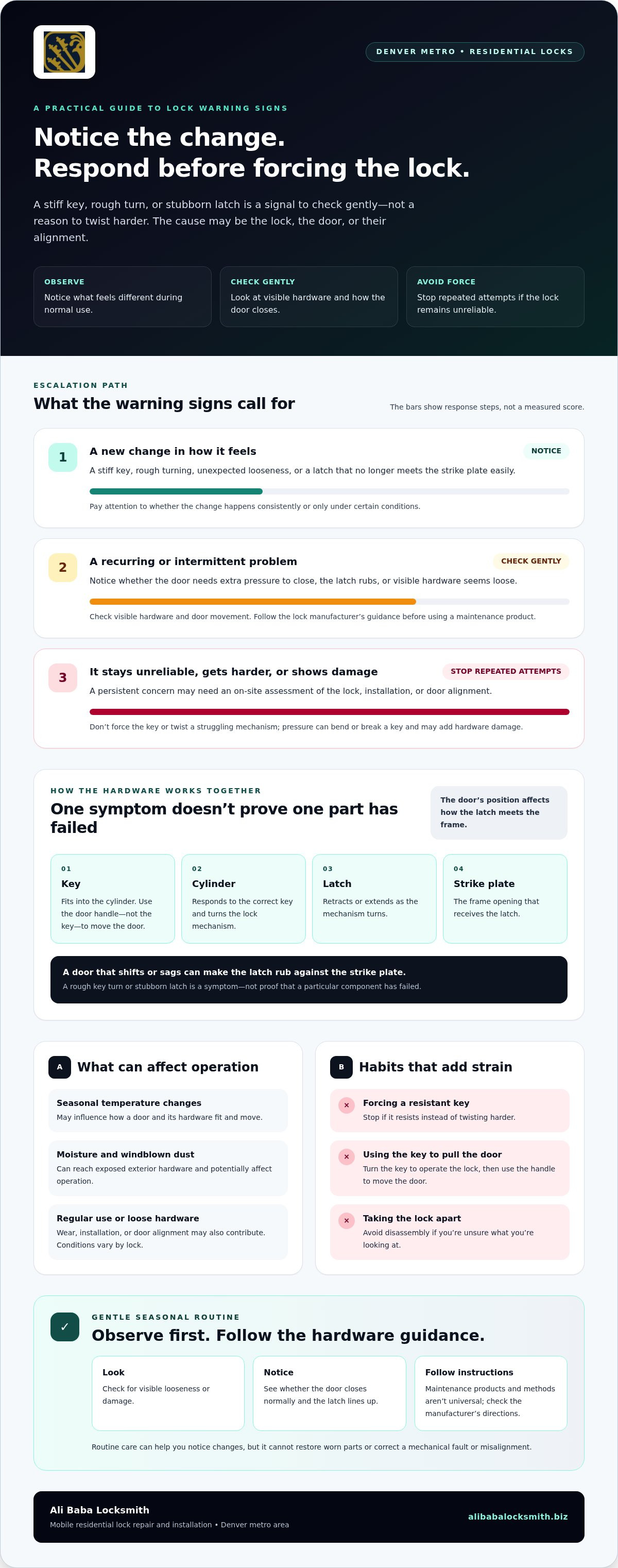
Locksmith Denver Metro Area: How to Make Your Locks Last Longer

What if a key that suddenly sticks or turns roughly is an early warning, not a reason to force it? In the locksmith Denver metro area, seasonal shifts and fine, blowing dust can affect exterior locks, while everyday habits may add wear. A small change in how a lock feels is worth noticing before it becomes harder to use.
It’s understandable to want a simple fix, especially when the cause isn’t obvious. But the wrong lubricant or a forceful DIY attempt can make the problem worse. Start with gentle checks: look for visible looseness, notice whether the door closes normally, and follow the lock manufacturer’s instructions before using any maintenance product.
This guide explains how Denver-area conditions and daily use may affect locks, which basic checks you can safely make, and what warning signs call for professional attention. You’ll also learn what to expect from residential lock repair or installation. Ali Baba Locksmith provides on-site residential lock services across the Denver metro area, so if gentle care doesn’t resolve a change in operation, professional help can identify the next step.
Table of Contents
Why Denver Metro Area Locks Need Consistent, Season-Aware Care
What Makes a Lock Wear Out - and Which Parts Need Attention?
DIY Lock Care vs. Professional Repair: How to Tell the Difference
A Simple Seasonal Lock-Maintenance Routine for Denver Homeowners
When to Call Ali Baba Locksmith for Denver Metro Area Lock Help
Why Denver Metro Area Locks Need Consistent, Season-Aware Care
A key that feels stiff, a lock that turns differently from one attempt to the next, or a latch that no longer meets the strike plate easily can signal a change worth noticing. The cause isn’t always the lock itself. A door can shift slightly, hardware can loosen, or the internal mechanism can wear with regular use.
Exterior hardware faces changing temperatures, precipitation, and windblown dust, while interior hardware is generally more sheltered. In the Denver area, seasonal temperature swings and freeze-thaw conditions may affect how a door and its hardware operate. Moisture or fine debris can also contribute to resistance, though conditions won’t affect every lock in the same way.
Paying attention to gradual changes can help you avoid forcing a key when the lock becomes difficult to use. Routine care may support smooth operation, but it can’t restore worn parts, repair visible damage, or correct a door that has shifted out of alignment. If gentle checks don’t help, a locksmith Denver metro area homeowners call for residential lock repair can assess the hardware on-site.
How exterior conditions can affect Denver-area door hardware
Temperature changes may influence how a door and its components fit and move. A door that worked smoothly in one season may rub or latch differently when temperatures fluctuate. Moisture and dust can also reach exposed hardware and potentially affect operation. These are possible contributors, not a diagnosis; recurring resistance can also result from wear or a loose strike plate.
Before applying lubricant or changing your maintenance routine, check the lock manufacturer’s guidance. Products and care methods aren’t universal, and an unsuitable product may leave residue or interfere with operation. Avoid taking the lock apart to investigate.
Early signs that a lock needs attention
Pay attention to new resistance, unexpected looseness, or operation that works only intermittently. A single difficult turn may be a brief alignment issue, but a pattern that returns deserves attention. Notice whether the key, latch, or door movement has changed, and whether the problem happens consistently or only under certain conditions. These details help describe the issue clearly.
Don’t force a key or twist a struggling mechanism. Pressure can bend or break a key and may add damage to hardware that already needs adjustment. If the lock remains unreliable, shows visible damage, or becomes harder to operate, stop repeated attempts and arrange professional repair.
A useful habit is to notice how the lock operates during ordinary use and respond when something changes. Seasonal care can help you spot concerns early, but it won’t correct a mechanical fault or misalignment. Keep checks gentle and appropriate to the hardware.
What Makes a Lock Wear Out - and Which Parts Need Attention?
Locks can change gradually. A key may need more adjustment than before, or the door may take extra pressure to latch. Neither change automatically means the whole lock is worn out. Regular use, exposure, installation, and the condition of the door and hardware all influence how a lock operates, so there’s no single lifespan that applies to every setup.
Lock maintenance is the inspection and care that helps preserve reliable operation. It can help you notice changes early, but it can’t reverse worn parts or correct a mechanical problem.
How the key, cylinder, latch, and strike plate work together
The key fits into the cylinder, the part of the lock that responds to the correct key and turns the mechanism. That movement retracts or extends the latch, which enters the doorframe when you lock the door. The strike plate is the metal opening in the frame that receives the latch. Britannica’s overview of the components of a lock explains how internal parts interact to secure a door.
These parts rely on the door sitting in a position where the latch meets the strike plate cleanly. If the door shifts or sags, the latch may rub against the plate, making a sound lock feel difficult to turn. A rough key turn or stubborn latch is a symptom, not proof that a particular component has failed.
Everyday habits that can accelerate wear
Small habits can put unnecessary strain on a lock. Avoid forcing a key that doesn’t turn smoothly or using it to pull a door open. A key operates the cylinder; use the door handle to move the door. If sticking keeps returning, don’t treat repeated force as a fix. Notice whether the door needs extra pressure to close or whether visible hardware feels loose.
Forcing the key: Stop if it resists instead of twisting harder.
Using the key as a handle: Turn the key to operate the lock, then use the door handle to move the door.
Ignoring recurring changes: Note when the problem happens and whether the door or lock behavior has changed.
Check the manufacturer’s care instructions before applying a maintenance product. The right approach depends on the lock, and a household product or improvised fix may not suit its mechanism. Avoid disassembly if you’re unsure what you’re looking at.
If the lock remains unreliable, Ali Baba Locksmith provides mobile residential lock repair and installation in the Denver metro area. An on-site assessment can help identify whether the issue involves the lock, its installation, or door alignment. For persistent concerns, explore residential lock repair.
DIY Lock Care vs. Professional Repair: How to Tell the Difference
Not every rough turn means a lock needs replacement. A brief change in how a door closes may be worth observing, while recurring sticking or unreliable locking deserves attention. A practical distinction is to make gentle checks and follow the care instructions, but stop experimenting when mechanical trouble keeps returning.
These checks help you describe what’s happening; they aren’t a diagnosis. If a problem appears once, note the circumstances and see whether the door and lock operate normally afterward. If the same difficulty returns, avoid repeated tests that involve extra pressure. A locksmith can assess whether the issue involves the lock, the door, or the position of the hardware.
Lock-care steps homeowners can take without forcing the mechanism
Start with the door. Close it gently and notice whether it meets the frame without lifting, pushing hard, or pulling on the key. Use a clean key as intended, and stop if it meets resistance. For cleaning or lubrication, follow the manufacturer’s directions for that specific hardware. Don’t add an unapproved product or disassemble the mechanism to troubleshoot.
When lock repair or installation may be the safer next step
Recurring difficulty, visible damage, or a lock that doesn’t reliably secure the door calls for professional assessment rather than another DIY attempt. That doesn’t mean the entire lock must be replaced. A locksmith can inspect residential lock operation and determine whether repair or installation is the appropriate response.
Ali Baba Locksmith provides mobile residential lock repair and installation in the Denver metro area. If the lock continues to cause trouble after gentle observation and manufacturer-directed care, professional help can identify the issue without risking more damage. The Denver residential locksmith guide also explains how residential locksmith support can help with home security concerns.
A Simple Seasonal Lock-Maintenance Routine for Denver Homeowners
A brief check during ordinary home upkeep can help you notice when an exterior lock starts behaving differently. Compare how it operates now with what’s normal for that door, especially as seasonal conditions change. This routine is for observation and gentle care, not disassembly or repair. If something catches, stop rather than applying extra force.
Seasonal lock checklist: inspect visible hardware, operate it gently, follow the manufacturer’s guidance, and get help when symptoms keep returning.
A quick check for exterior doors and locks
Include exterior doors in routine home checks, such as when you’re already looking over doors and frames. Look for visible looseness or damage without removing components. Close the door normally, then gently test the key and latch. Stop if either resists or catches. Notice whether the door aligns and closes without unusual pressure.
Look over the door and hardware. Check the lock, handle, frame, and strike plate for visible damage or looseness. Don’t take the lock apart.
Check the door’s movement. Open and close it normally. Notice whether it rubs, needs an extra push, or no longer meets the frame as it did before.
Test the lock gently. Use the key and latch as intended, without twisting against resistance. Stop if operation feels abnormal.
Follow the manufacturer’s care directions. Use only cleaning or maintenance methods recommended for that lock. If guidance isn’t available, don’t improvise with products or tools.
A check should feel like ordinary operation, not a stress test. There’s no need to repeatedly turn the key or push the door to see whether a problem will disappear. One calm observation is more useful than added pressure, which can make it harder to tell what changed.
How to keep a useful record of lock problems
If you notice a change, record which door is affected, what feels different, and when it happens. Note whether the symptom repeats and whether it appeared after a shift in seasonal conditions, without assuming the weather caused it. A simple note on your phone can help you describe the pattern clearly. Use the same approach for other home lock maintenance: record what you notice rather than trying to diagnose the cause.
Repeated resistance, visible damage, or unreliable locking is a reason to stop DIY attempts and arrange an assessment. Ali Baba Locksmith provides mobile residential lock repair and installation in the Denver metro area. If your notes show a recurring issue that basic observation hasn’t resolved, request residential lock service for on-site help from a locksmith Denver metro area homeowners can turn to.
When to Call Ali Baba Locksmith for Denver Metro Area Lock Help
If a lock remains unreliable after gentle checks or you notice visible damage, professional help is a sensible next step. A lock that sticks repeatedly, fails to secure the door consistently, or becomes difficult to operate can disrupt everyday access. Continuing to force it may add strain without resolving the cause.
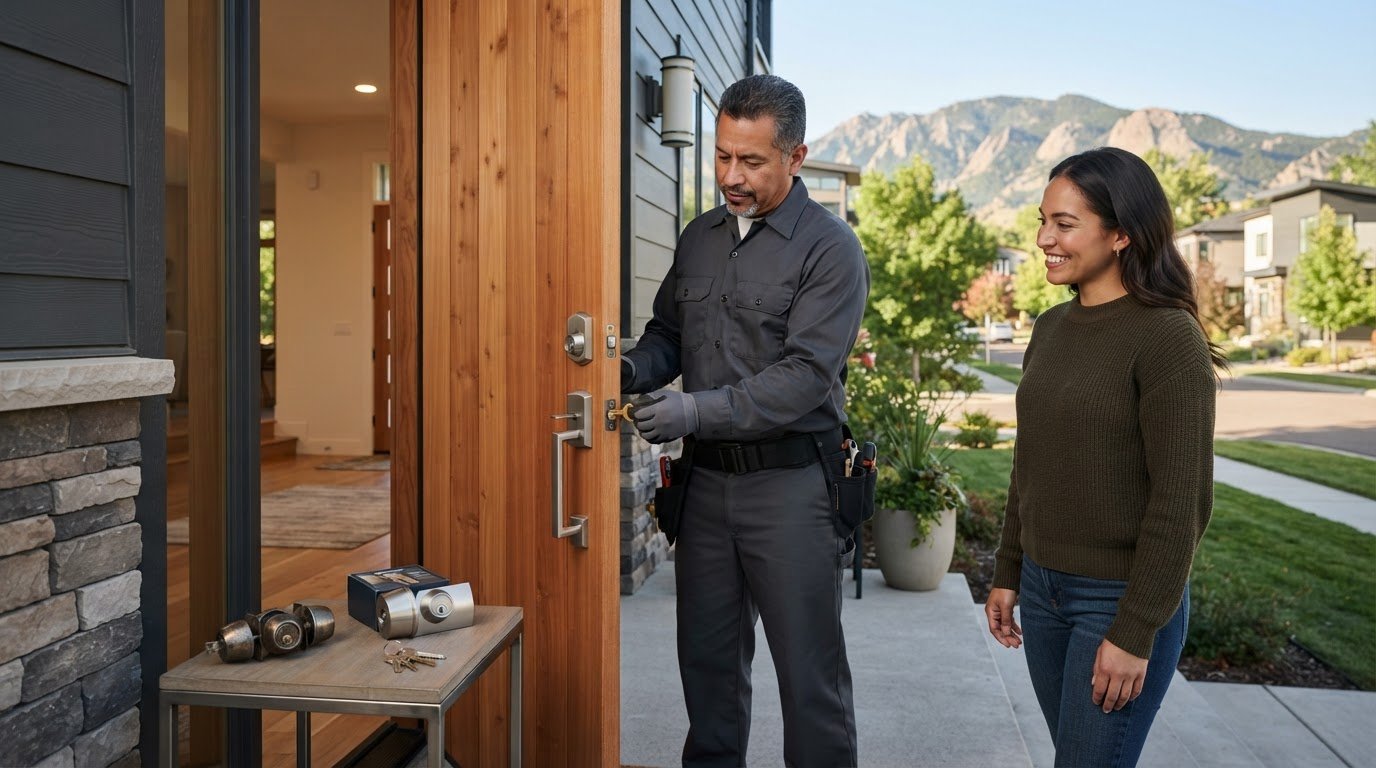
Ali Baba Locksmith is a mobile locksmith Denver metro area homeowners can call for on-site residential lock repair and installation. An assessment can help distinguish a problem with the lock itself from one involving door alignment or how the hardware is fitted. A rough turn doesn’t automatically mean replacement is needed; understand the issue before deciding what work is appropriate.
What to share when describing a lock problem
A clear description helps explain what you’re experiencing. Note which door is affected, what happens when you use the key or latch, and when you first noticed the change. Mention whether the issue repeats, whether the door is difficult to close, and any visible damage to the lock or surrounding hardware.
There’s no need to take the lock apart or attempt a repair before requesting help. Simple observations are useful, but a description alone can’t establish the cause or determine the right repair. If operation changes from one attempt to another, explain that pattern too.
Identify the door: Describe its location in the home and whether it’s an exterior or interior door.
Describe the symptom: Explain whether the key catches, the latch resists, or the lock operates inconsistently.
Share the pattern: Say when the issue began and whether it happens every time or only occasionally.
Note visible changes: Mention loose, bent, or damaged hardware, or if the door needs unusual pressure to close.
How professional attention can help protect reliable access
A lock and door work together, so the source of difficulty isn’t always obvious from the symptom. Professional attention can help assess whether wear, damage, installation, or door alignment is affecting operation. Ali Baba Locksmith provides mobile residential lock repair and installation in the Denver metro area, bringing the service to your home so you don’t need to remove the hardware yourself.
Share what you observed and let the assessment guide the next step. The goal is to address the cause of unreliable operation, not assume every sticking lock needs replacement. If a lock is damaged or continues to cause difficulty, avoid forcing it while arranging service.
For residential lock help in the Denver metro area, contact Ali Baba Locksmith through the website and describe the door and symptoms you’ve noticed.
Make Lock Care Part of Your Home Routine
Set a simple reminder to pay attention to the locks you use every day. A quick, gentle check can help you notice a change while there’s still time to respond calmly. If a lock starts acting differently, don’t wait for a lockout to take it seriously, and don’t force it in an attempt to make it work.
When routine observation isn’t enough, professional assessment can help clarify the next step. Ali Baba Locksmith provides residential lock support in the Denver metropolitan area. Whether you’re unsure what a change in operation means or need help with a lock that no longer feels reliable, reach out for on-site residential lock service.
Take the next step toward dependable access:Contact Ali Baba Locksmith for residential lock help. Describe the issue and the changes you’ve noticed to get started.
Frequently Asked Questions
Can Denver weather affect how my exterior door lock works?
Yes, seasonal weather can influence exterior door operation, although it won’t affect every lock the same way. Temperature and moisture changes may affect how a door sits in its frame, changing how easily the latch meets its opening. If a lock behaves differently during a cold spell or after wet weather, note the timing. Don’t assume weather is the sole cause if the change continues.
Should I lubricate a stiff lock, or could that make it worse?
Follow the lock manufacturer’s instructions before applying any lubricant. A product that isn’t suitable for your particular lock may leave residue or interfere with operation. If the instructions recommend a specific product or method, follow that guidance and avoid spraying or pouring in a general-purpose household product. If the key still feels stiff afterward, stop testing it and have the lock assessed rather than adding more.
Why does my key turn more easily when the door is open?
If the key turns more easily with the door open, the door or latch may be under pressure when closed. For example, the latch might not line up cleanly with the opening in the frame. This observation can help distinguish a door-closing issue from a change inside the lock, but it doesn’t confirm the cause. Don’t push or pull hard while turning the key to compensate.
Can a locksmith repair a lock instead of replacing it?
Yes, a locksmith may be able to repair a lock, depending on its condition and the cause of the problem. A difficult turn doesn’t automatically mean the lock needs replacement. The issue could involve an adjustment, worn hardware, or the way the door closes. Ali Baba Locksmith provides residential lock repair and installation in the Denver metro area, with the appropriate next step based on an assessment of the lock.
When should I stop using a lock that keeps sticking?
Stop forcing it as soon as the key or mechanism resists, and avoid relying on a lock that doesn’t consistently secure or release the door. Repeated attempts can strain the key or hardware, and a key that becomes difficult to remove may leave you with less reliable access. If the lock is visibly damaged or the problem keeps returning, arrange professional attention before the issue worsens.
What information should I share when calling a Denver locksmith about a lock problem?
Describe which door is affected, what happens when you use the key or lock, and whether the trouble occurs every time or only in certain circumstances. Mention when you first noticed it, any visible damage, and whether the door has become harder to close. These details help Ali Baba Locksmith understand the reported symptoms; they don’t establish a diagnosis before the lock is assessed.

Comments